


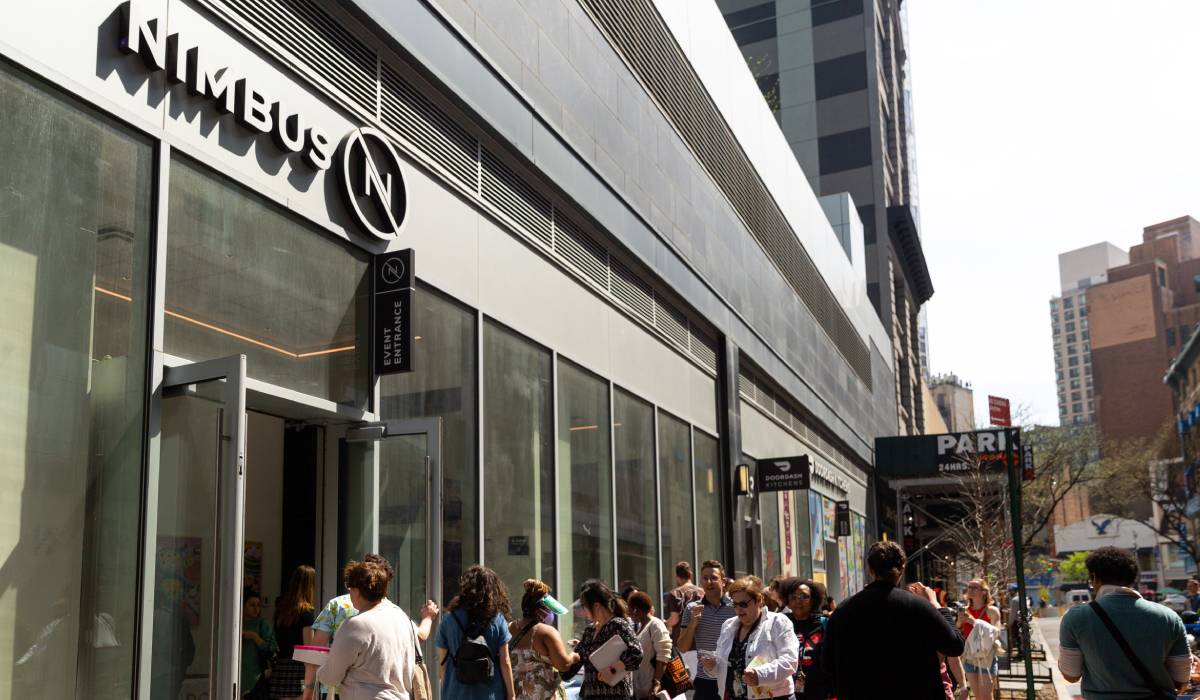
Nimbus, an innovator of commercial kitchen spaces, has been profitable since it was founded in 2019 by Camilla Opperman Morse. That’s quite the claim to fame, considering the struggles of other shared space operators like Kitchen United, CloudKitchens, and REEF Kitchens, which have reportedly closed locations and slowed their once-rising growth trajectory.
First and foremost, Opperman Morse attributes the company’s consistent balance sheet to prioritizing strong unit economics. It’s important to note that Nimbus is not venture-backed. It has never had millions of dollars in its coffers. As a result, every decision is “really colored,” explains Opperman Morse.
Beyond that, two factors set Nimbus apart and have pushed it toward profitability—flexibility and a focus on community. Regarding flexibility, members can cook in Nimbus kitchens for a few hours or a few years while competitors typically only offer longer-term rentals. From an economic standpoint, these shorter-term rentals have a substantially higher contribution margin. Combining that higher margin and variable revenue stream with a more stable longer-term operation has proven to be “incredibly profitable” at the unit level, says Opperman Morse. On the community side, all locations—New York City’s Lower East Side, Downtown Brooklyn, SoHo, and Midtown—have front-of-house spaces where members can host pop-ups, dinner parties, and tastings.
“Consumers appreciate that transparency,” Opperman Morse says. “They want to know where their food is coming from.”
The flexibility allows Nimbus to target a variety of food businesses across size and maturity—catering, bakers, CPG brands, and pop-up delivery concepts. Clients include DoorDash, Jersey Mike’s, and Fuku. In another example, chef Cristina Martinez brought her South Philly Barbacoa concept into Nimbus’ downtown Brooklyn kitchen as a three-month pop-up restaurant to test the market. Additionally, Noma—a three-Michelin-starred restaurant based in Denmark—used kitchen space to prepare food for a two-week pop-up in New York City. Nonprofit Chefs for Impact uses Nimbus to serve multicourse fundraising dinners as well.
“We’re really focused on bridging that gap between these hyper-efficient off-premise kitchens and a traditional restaurant and that focus on community. That in-person interaction makes our product a lot stickier than some of the soulless ‘ghost kitchens’ that have popped up around the country,” Opperman Morse says. “And it really helps streamline our sales process as well. So, it makes the product feel a lot better for our members, but then also from an economic standpoint, it ends up being really beneficial.”
The Brooklyn spot features a digitally-enabled food hall in which multiple concepts are prepared in the same kitchen and can be ordered online on one bill. However, this location is different in that customers can also walk in, order from one place (not several booths like a traditional food hall), and eat on-site.
The operation is cheaper for food brands. They don’t need a cashier or individual food stall to hand off meals. They’re getting all the benefits of people entering the door but without the added labor costs. A lot of times, chefs come out from the back of house and interact with guests too. Opperman Morse calls it a “food hall 2.0.”
“We’ve never wanted to be a ghost kitchen,” Opperman Morse says. “We don’t want to bill ourselves as a ghost kitchen because we don’t want there to be that lack of interaction between the brands and the end-consumer. And just having a place for customers to come in, they can order the food, they can eat it on-site, which is different than a lot of other operators in the space. We actually have seating in place for up to 74 people in that Downtown Brooklyn location. It’s quite large. It brings some of that humanity and hospitality back to the operation. I think it ultimately bolsters our members’ success. It increases transparency and candidly makes it a lot more fun for operators to use our spaces as well.”
In early December, Nimbus announced that it acquired the SoHo and Midtown locations. The latter is near Times Square and features a 9,000-square-foot facility with 10 rentable kitchens. The SoHo spot has 6,800 square feet and nine rentable kitchens. Both of these sites were formerly operated by Kitchen United.
Opperman Morse says Nimbus doubled the supply of its rentable kitchen units overnight when these locations were launched last year. Both are adjacent to high foot traffic and are easily accessible to public transportation and drivers. The company felt good about expansion given the success of existing operations. Nimbus had such great occupancy in Brooklyn and the Lower East Side that it had to turn away potential members because there wasn’t enough space.
“With all of that, we knew that we could go in, we could launch these locations profitably,” Opperman Morse says. “It’s obviously still early innings at the new locations, but our thesis has proven correct. We’re very excited about being able to accommodate more food businesses with this increased footprint, and we’re very much looking forward to continuing to ramp up those new sites and just to overall grow our presence in New York City.”
Opperman Morse believes there’s an opportunity for Nimbus to have a national operating footprint, and it’s currently exploring areas to expand outside of New York City. There aren’t any announcements to make at the moment, but additional markets will come on the radar in the coming years.
She’s confident in the off-premises kitchen having viability, but she emphasizes that the model has to evolve. Opperman Morse predicts that as the industry matures, more operators will shift toward the flexible and community-centric strategy that Nimbus pioneered.
“Obviously ghost kitchens have quite a bad rap and I think candidly a lot of the times that negative press is well-deserved in some ways, but Nimbus is very squarely not a ghost kitchen,” Opperman Morse says. “We’re a co-cooking community. We provide food businesses, and people who are interested in engaging with those food businesses, the platform in which to produce and promote those products. It’s categorically in a different realm than what most people think of when they hear the term ghost kitchen.”


