


When Hurricane Helene barreled through Western North Carolina last fall, it wreaked havoc on Asheville’s River Arts District. Floods destroyed homes, roads, and wiped out entire businesses.
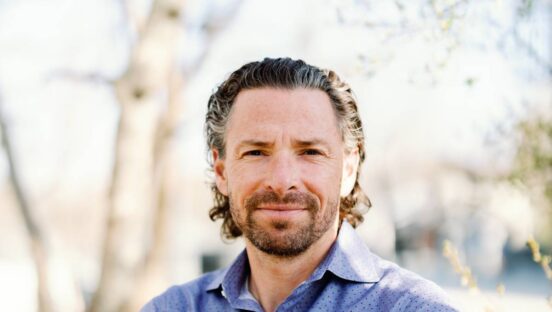
For restaurateur Jacob Sessoms and his team at The Radical—a boutique hotel that’s home to his restaurants Golden Hour, after/glow, and a 125-seat rooftop bar—the storm was a defining moment. “Of course, the first 48 hours are kind of like non-reality,” recalls Sessoms, the founder and chef-partner at Perfectly Ad Hoc Hospitality Group, who FSR featured in our November 2024 cover story on Lessons from Successful Hotel Restaurant Chefs.

“I was trying to triage situations in different buildings. We had a large group here in the hotel, and the hotel actually lost power in the early hours of the storm,” he continues. “I was trying to figure out how to feed 60 people here from my other buildings … It was truly just non-reality because we didn’t have working cell phones, nobody had any internet, nobody had any power, nobody had any running water.”
With his flagship restaurant Table without power for nearly a month and The Radical’s mechanical systems underwater, Sessoms had to act fast, yet with intention. He went into a sort of calm “chaos mode” state where he was able to figure out the best next steps, check on friends, family, and coworkers, and develop a plan to start helping people.
“With access to four walk-in refrigerators full of food that was now going bad, I was disseminating food pretty rapidly, trying to get food out to people,” he says. Sessoms’ other concept in town—his casual neighborhood eatery called All Day Darling—only lost power for about 24 hours, so he was able to set up there on the second day with his salaried crew to start cooking food and feeding people. “We were cooking for about 1,000 people a day before World Central Kitchen showed up on the ground,” he says, “and I will say they showed up on the ground I think on day six or seven—long before the federal government showed up.”
The biggest challenge was access to clean water after the storms and flooding ruptured pipes and led to widespread water outages for weeks. Even when running water was restored, it wasn’t safe to consume unless it was boiled. World Central Kitchen helped All Day Darling—and a number of other Asheville restaurants—acquire clean water tanks, cisterns, and pumps, and even covered the initial costs so operators could focus on preparing and serving meals.
On the impact of World Central Kitchen, a non-profit organization providing food relief in disaster areas founded in 2010 by Spanish-American chef and restaurateur José Andrés, Sessoms adds: “Their ability to show up and dispatch logistics on the ground within a matter of hours and be dispatching food and information into the community was amazing to watch. What an incredibly effective and efficient organization. They were great to work with.”
Amid the chaos, community prevailed. “It was amazing to see the community come together. I will say, it was really wonderful to have places and spaces that are mine where people could come to immediately and start using a community space,” he notes. “People would leave messages for their neighbors, like, ‘Hey, I’m fine. Let whomever know we’re fine.’ It was very heartening to see that community exists in the vacuum that was created by that breakdown.”
The hardest part for him, Sessoms says, was having to furlough employees and the “psychological equivalent to COVID that was hard to separate.”
Once utilities returned, Sessoms’ focus became economic recovery—for his staff and his city. “What can I do to keep my economy rolling, to keep my employees at work and to keep people fed? Every decision I was making was, what do I need today to bring people to work and to get food into people’s hands? Both from a place of, I need to keep the community rolling, but also the most basic and incremental aspect of a community at this point is the community economy,” he explains. “When the economy falls apart, everything starts to fall apart … I take my responsibility to the community very seriously. I have 75 to 100 employees whose finances are my responsibility, to some degree, and so keeping the circle moving is my primary goal.”
Because All Day Darling was able to reopen about a week after Helene—”we were the first or second independent restaurant in town to reopen, so it was immediately extremely busy”—Sessoms was able to bring employees from his other properties over to keep them working.
Despite major losses, including a three-month closure at Golden Hour, the team began reopening slowly. “We just reopened both Table and Golden Hour at about a 50 percent labor model to what it was before,” Sessoms says. “Part of that was under the presumption that we had lost labor force, which does seem to be sticking around a little bit.”
Though many local businesses and farms were impacted, Sessoms says the producers he works with mostly weathered the storm. “The bulk of our farmers were all more or less fine. They lost a month’s worth of sales, and some of them had badly damaged parts of their crops, but most of the artisans and growers and producers that we source from in all the restaurants were more or less fine.”
As for operational changes, Sessoms notes, “When we reopened Golden Hour, we did restructure a little bit, but it was stuff that we were working on prior to anyway. We just simplified how we prepare and produce products so that we could run a more efficient operation.”
He also shares a behind-the-scenes tidbit he learned on why one chain in town was able to reopen so quickly. “Chick-fil-A builds every one of their buildings with an underground clean water cistern and pump system so they can turn off city water and immediately go to their own clean water,” he says. “I would like to say that I would build every restaurant from now on with a 5,000-gallon tank of clean water. But is that really realistic?”
Community at the Center
Sessoms credits Asheville’s strong hospitality ties and collaboration for the swift recovery. “Everybody came together,” he reiterates. “There were some extremely positive, truly wonderful things that came out of this experience for the community … Day in and day out during the immediate and then probably the following six weeks, we talked every single day, all of us restaurant owners, other service-related businesses, tourism-based businesses, community-based businesses.”
He continues, “We were all on the phone with each other texting, ‘hey, what do you think about this? What should we do about this? Anybody have this? What’s your plan for this? Can you help me out?’ And really, truly, we were in each other’s spaces and places and helping each other out. I don’t know how other communities react in these circumstances, but it was very strong here, and it’s been very lasting for us, actually.”
Even as he focused on rebuilding locally, Sessoms found support from beyond Asheville’s borders, culminating in a series of fundraising dinners that brought national attention—and much-needed relief funds—to the region.
Sessoms partnered with over 20 chefs and restaurant owners from New Orleans, including Lilette chef-owner John Harris, who rallied together to launch the Cooks for Carolina initiative—a New Orleans dinner series which raised money for Explore Asheville’s “Always Asheville Fund,” aimed at providing emergency grants to small independent travel and hospitality businesses, including local restaurants impacted by Helene. Other Asheville chefs including Peyton Barrell, Matt Dawes, and Trevor Payne, partnered with Sessoms and the New Orleans chefs at the events, which took place in November and December.
“I think we raised close to $300,000, a drop in the bucket. But also it was really meaningful, because it put about $10,000 in the hand of multiple restaurants that were able to immediately put it towards either work that needed to be done, reprovisioning to reopening,” Sessoms notes.
Not Going Back, but Going Forward
Looking ahead, Sessoms is already rebuilding with intention. The Radical just became part of Hilton’s Tapestry Collection, for example. “It’s essentially so we can book through Hilton Honors Program,” he says. “With the Tapestry brand, we retain all of our independent branding.”
Sessoms adds, “My job for my company is growth, so I always have something I’m working on. Top of mind for me is a continued move to incorporate strong business reason on one hand, and compassionate, honest vulnerability in the other hand as I manage my business and the people that run it. They seem like diametrically opposed axes, but I believe that’s how I build an effective operation—with people that feel cared about, and at the same time, using reason to make our business decisions as opposed to fast, reactionary feelings.”

Amid continued uncertainty, Sessoms leans into inner stillness with more yoga and medication—but he’s undeterred. “I want to be really clear that I think we face this phrasing in COVID of ‘back to normal,’ and I think what’s best for the human brain, is the wrong word there is ‘back.’ We’re not going back. We’re going forward,” he says.
“We’re not going to abandon Western North Carolina because it might flood again,” he says. “We live here. What choice do we have? We’re gonna double down and we’re gonna do it, and the thing is, it’s working.”
“The community is strong, stronger than before, and we see a very vibrant and positive forecast for even just the coming months, let alone the year. It’s looking very good.”


