

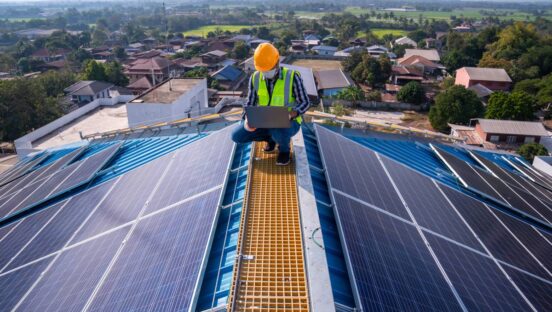

Numerous net-zero targets have made restaurant leaders realize it’s time to shrink their carbon footprints. There’s no single way to do that, but many have explored using renewable energy in their facilities.
Planning a Progressive Expansion
Achieving renewable energy targets is easier when decision-makers create specific milestones and paths to reach them. Those from fast-food restaurant chain Wendy’s took that approach when setting a 2030 goal that uses community solar programs to reduce emissions from a 2019 baseline. It involves reducing Scope 1 and 2 emissions by 47 percent and cutting Scope 3 emissions from franchisees’ restaurants by 47 percent per location.
Wendy’s executives also want more than 200 locations to source solar energy by 2025—up significantly from the 10 that did so in 2023. As of April 2024, almost 40 company-owned Florida locations got solar power from an energy provider partnership.
Then, nearly 100 Illinois and Massachusetts locations receive renewable energy from a public benefit corporation that connects participants to nationwide community solar programs. Leaders anticipate those restaurants eventually meeting 40 to 100 percent of their energy needs with sun-powered solutions.
Making a gradual roadmap like this one is a practical way for decision-makers to make serious renewable energy commitments. Otherwise, it’s too easy for them to get overwhelmed or lose sight of goals, potentially slowing their momentum.
Solar panels can reduce restaurants’ energy bills by minimizing their power provider dependence. However, people can make other meaningful changes to reduce their usage. For example, they could enjoy up to $400 in annual savings by eliminating one hour of idle or unnecessary oven operating time daily.
Yum China operates KFC, Taco Bell and Pizza Hut in the Chinese market. Its executives realized the necessity of an all-encompassing sustainability effort. Some restaurants feature solar-powered outdoor umbrellas that provide nighttime lighting, while 70 of locations in three Chinese provinces have achieved net-zero operations due to renewable energy and other upgrades.
However, the eco-friendly enhancements go beyond renewable energy. In April 2022, leaders opened two KFC Green Pioneer locations, offering several pioneering approaches. Statistics indicate these branches have about 15 percent lower emissions than the chain’s typical locations. Some restaurant features are exceptionally creative, such as the leather alternative made from recycled coffee grounds and the tubular daylighting system that minimizes the need for artificial illumination.
These possibilities illustrate how restaurant leaders must remain open-minded and push the boundaries when pursuing renewable energy or other sustainable options. Using multiple solutions simultaneously can maximize the benefits.
Collaborating With Renewable Energy Experts
Even once restaurant leaders become interested in solar energy, they may need support to turn ideas into workable possibilities. That was the case for executives from the Golden Arches Development Corporation—the firm behind McDonald’s—when they brought renewable options to Filipino restaurants. The leaders collaborated with Meralco, which offers sustainable energy expertise.
Some of the custom possibilities at McDonald’s locations include solar rooftop panels and lampposts, as well as electric vehicle charging stations. Selected restaurants had coin-operated charging stations for electric bikes and scooters installed during a previous sustainability effort. Restaurants will use an electricity optimization plan that relies on off-peak usage, and some locations will receive inverter appliances and energy-efficient lighting.
Estimates suggest these latest renewable energy upgrades will collectively bring cost savings of up to 880,000 Philippine pesos per year and improve operational efficiency. Curbing unnecessary electricity usage and investing in renewables is particularly important since many Filipino McDonald’s restaurants have 24/7 operations or delivery services.
It’s easy to imagine scenarios where a location could get most of its energy from solar panels, and allow delivery employees to recharge their e-bikes and scooters using on-site stations. Renewable transitions are not always easy, but they become much more manageable when eco-friendly changes are maximally convenient for those involved.
Proceeding With Microgrid Installations
Power outages can be catastrophic for restaurants, causing spoiled food, disappointed customers and decreased profitability potential. However, many decision-makers realize microgrids can fit into their renewable energy plans by increasing resilience.
Microgrids can operate alongside or separate from an area’s main electricity grid. Such flexibility gives users options to reduce business ramifications during disruptions. Executives at a Californian Chick-fil-A location focused on that benefit when commissioning solar microgrid solutions for some restaurants. These options work in 5,000-square-foot buildings, and Chick-fil-A was the first dining establishment of its type to pilot them in the United States.
As of April 2024, the chain had two systems operating in California, and leaders planned to install a third elsewhere in the state soon. They were eager to rely on the microgrid to become less dependent on the local infrastructure and continue serving area customers if widespread outages occurred.
Additionally, one often-mentioned downside is weather fluctuations can adversely affect solar energy output. However, Chick-fil-A’s system addresses that issue with battery backup technology. It can store unneeded energy for later use, providing a handy solution for cloudier days.
Upgrading Restaurants for the Future
More of today’s restaurant visitors expect and demand their favorite establishments feature sustainable aspects. Renewable energy is one of many ways to satisfy them and earn their loyalty. These examples show how strategic upgrades can pay off.
Emily Newton is the Editor-in-Chief of Revolutionized Magazine. She has over six years experience writing for the food and beverage industry.


