

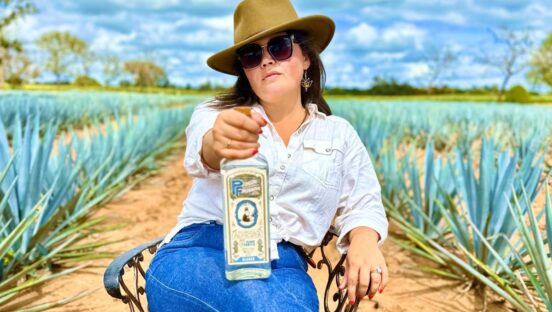

Rachel Kiley’s path through the hospitality world mirrors that of many industry veterans: She started as a hostess, moved on to serving tables, and eventually found her groove behind the bar. Bartending was her passion, but as her family grew, the late nights became harder to manage. So, when one door closed, another opened: a new opportunity in the world of craft beer.
She became the first-ever official employee of Monday Night Brewing in 2012, a regional craft brewery based in Atlanta. After five years with the company, she stepped into the role of chief operating officer, where she played an integral role in building the foundation of the brand, helping it scale across six locations in Georgia, Alabama, Tennessee, and North Carolina.
Kiley led not just the brewery’s southeastern expansion but also the production and distribution of over 21,000 barrels of beer alongside her husband, Peter Kiley, who continues to serve as Monday Night’s brewmaster. It was here that she learned the ropes of relationship building, quality sourcing, and product innovation—all skills she would eventually leverage with her own company, as well as in her role as President of the Georgia Craft Brewers Guild in 2022 and 2023.
In July 2024, Kiley transitioned from her role at Monday Night Brewing and stepped out as CEO and cofounder of Sneaky Spirits, the holding company that owns award-winning booze brands including Sneaky Pete Spirits, Pedro Furtivo Tequila, and Yacht Water. While she remains close to Monday Night as a strategic advisor, Kiley says Sneaky Spirits was her chance to build something from scratch and make her mark on the industry.
“I wanted to feel that startup hustle. It’s a big chair at a small table right now [as CEO], but building something anew is exciting to me,” Kiley says. “There’s a lot of money thrown around in the spirit industry … but what we’ve created is an authentic product we care a lot about, that’s super high quality.”
She is not only supporting the brands that currently exist under the Sneaky Spirits umbrella, but also working to push through new innovations and concepts coming down the pipeline that are set to debut in the coming year. As Kiley hires her first round of employees, she’s actively involving them in the process from start to finish, fostering a culture of creativity and inclusivity.

“Employees want to sell something they care about. Customers want to drink something that somebody cares about. It’s a simple but foundational principle for Sneaky Spirits,” Kiley says. “I’m bringing my team to meet the farmers and their families. It connects them to the product, it keeps them motivated, and it brews inspiration.”
After spending 15 years entrenched in a male-dominated industry, Kiley is candid about her experience in craft beer and how it has evolved over the years. She says she’s had a front-row seat to the effects of harmful barriers and stereotypes and is committed to driving change through positive leadership and intentional activism.
“At conferences, people did not make eye contact with me. They treated me like a wife who tagged along instead of a peer. I’ve rarely felt respected for my perspective professionally,” Kiley says. “People did not ask me questions. They didn’t seek out my counsel, my advice, or leadership.”
She sees this as part of a broader cultural issue within the hospitality industry, especially when navigating microaggressions from external vendors or at industry events. But she credits Monday Night Brewery with creating a genuinely inclusive culture—one where all employees felt heard and valued. Founders Jeff Heck, Joel Iverson, and Jonathan Baker, she says, exemplified allyship and made conscious efforts to dismantle gender-based stigmas. Even in the taprooms, inclusivity was a priority, ensuring both employees and guests of all backgrounds felt welcome.
“I remember the reviews of Monday Night’s first taproom saying it felt like a man cave, and 15 years ago, this was the standard for breweries,” Kiley says. “But culture and consumers have changed. When opening the Charlotte location, I was intentional and specific as a strategy to create a taproom that women want to go to. Not just because of its aesthetic, but also its amenities. We hired a female manager, and it’s now the most successful location. You can no longer be so focused on the beer that you stop thinking about creating an experience for all types of customers. Mismatching furniture, a dartboard, and a bean bag aren’t going to cut it anymore.”
It’s often the small, easily overlooked details that can make or break someone’s comfort in a space, Kiley notes. Operational changes—like hiring security guards during peak hours—can make patrons feel safer, especially on busy weekends. Even something as simple as stocking feminine hygiene products in restrooms sends a strong signal of welcome and inclusion.
Beyond her own work, Kiley is deeply inspired by the broader network of women in the beverage industry who are working together to build a culture of empowerment and mutual support. As she continues expanding Sneaky Spirits’ distribution footprint and developing new liquors to bring to market in 2026, she hopes to inspire other women to enter—and thrive in—the industry.
“I hope I can shortcut the struggles of future generations. This is actually a wonderful industry for women who want to have a family. It’s flexible, and once you find your people, it’s fun,” Kiley says. “I have a crazy schedule, but I can also volunteer for my children’s field trip. I love that I can have my own family business with Sneaky Spirits, and sell into thousands of retail accounts across the whole region at the same time.”


