

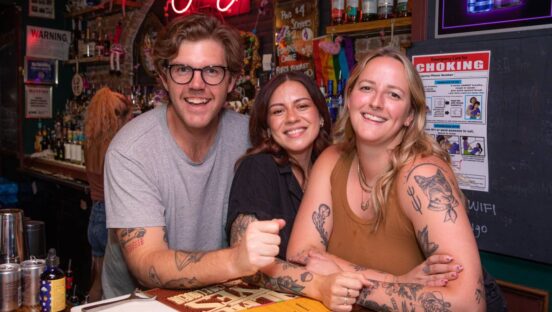

The hospitality industry has long grappled with instability, inequality, and a lack of support for workers. More organizations are stepping up to tackle these challenges head-on, helping bartenders and hospitality professionals build sustainable careers while fostering a more equitable and supportive industry. Groups like Another Round Another Rally and Focus on Health are leading the way, driving real change for workers behind the bar and beyond. Here’s a look at how they’re making it happen.
Fueling Career Growth with Support and Resources
Founded in 2018 by Amanda Gunderson and a group of like-minded individuals, Another Round Another Rally arose from a shared frustration with the lack of stability in the hospitality industry.
“We were just talking one night about how the system was not built to actually allow for full careers for most of the 15 million people employed in it,” Gunderson says. “Most people in hospitality that we knew did not have any form of health insurance provided by their employer. We could also see that there were fun educational opportunities that could develop skills and make people more hireable, so we just put our heads down and went to work.”
The organization provides emergency aid to hospitality workers in crisis, including general emergency funding, mental health support, a fund for those facing gender-based violence, and assistance for workers diagnosed with cancer. Scholarships and reimbursement grants are another area of focus. Another Round Another Rally offers a range of professional development opportunities, including immersive educational experiences and specialized programs in spirits education. These initiatives provide workers with the chance to learn from industry experts, explore different regions, and gain hands-on experience in areas like bourbon, rum, agave spirits, and cognac.
Gunderson says the ultimate goal is to dismantle systemic barriers in the industry, particularly for marginalized groups. “There are some startling truths about the realities of working in hospitality,” she says. Restaurant workers are two and a half times more likely to live in poverty than the general workforce, and more than 40 percent of restaurant workers are living with an income below two times the federal poverty line, according to Restaurant Opportunities Center United.
“That’s more than any other industry and disproportionately affects women, particularly women of color,” Gunderson notes.
When the organization talks about driving “radical change,” it envisions a future where women, people of color, LGBTQ+ individuals, people with disabilities, and immigrants hold leadership roles and occupy the highest-paying positions in bars and restaurants.
“We’re working toward creating an industry where everyone can build lasting and sustainable careers, without having to sacrifice stability or security,” Gunderson says. “And with millions of dollars in aid already doled out and thousands of hospitality members already helped, we’re on our way.”
While Gunderson acknowledges progress, she believes there’s still a long way to go. “Bars and restaurants have definitely made some moves toward a more equitable space in recent years,” she says, “but we are still at the bottom tier of the mountain that needs to be climbed.”
She points out that the industry remains deeply segregated—not just by restaurant style or neighborhood, but by job title.
“For example, when you see a person of Thai descent in management, you are most likely to see that person in a Thai restaurant,” Gunderson says. “If you work in a bar, you have likely seen your immigrant barback be passed up for a promotion time and time again when bartender positions become available. That is the truth across the spectrum in hospitality. There are so many barriers to break down for historically underrepresented voices in the hospitality space across the country. We believe that professional development is the key to this change because opportunity, education, experience, and mentorship all equal access.”
Mentorship is particularly crucial, and Gunderson believes the industry could do much more in this area. Her advice for leaders looking to create more mentorship opportunities for bar staff? “Seek the answers for how to build a great team from within and don’t manage everyone in a blanket way.”
“One of the statistics we love about mentorship is that if you have a mentor at work, you are five times more likely to get promoted, but if you are a mentor at work, you are six times more likely to get promoted,” Gunderson adds. “Set your team up for success with mentorship and think outside of the box in pairings. People don’t need to look the same or have the same background to be paired together.”
Championing Health and Wellness
Focus on Health advocates for wellness in the drinks industry, addressing a key challenge: bartenders often struggle in silence in a profession built around celebration. Co-founded in 2020 by Alex Jump and LP O’Brien during the pandemic, the organization was born from their own difficulties maintaining well-being in the industry. Their mission is simple—creating a healthier, more sustainable work environment for bartenders, servers, and chefs.
“Hospitality professionals dedicate themselves to serving others, often at the expense of their own health, struggling in silence and feeling isolated without clear resources for help,” Jump says. “We saw a critical need to address this imbalance and break the stigma around seeking support. Beyond that, the majority of hospitality workers are from marginalized backgrounds: women, people of color, queer folks. These people are often disadvantaged when it comes to their health and wellbeing.”
One of the biggest challenges, Jump explains, is balancing personal well-being with the demands of the job—long hours, late nights, high stress, and an industry culture where drinking and substance use are often normalized. It’s easy for workers to neglect their own needs, whether that’s sleep, mental health, or even basic nutrition.
Focus on Health helps hospitality professionals prioritize well-being through various programs and resources. The No/Low Tour, a nationwide event series, highlights non-alcoholic and low-ABV cocktails crafted by top bartenders, promoting mindful drinking while emphasizing creativity and community. The organization also partners with Another Round Another Rally to offer mentorship, scholarships, and access to industry conferences for professionals from underrepresented backgrounds. Additionally, Focus on Health provides educational resources, such as podcasts and workshops, to support career development and wellness. It also offers No & Low Beverage Consulting to help bars and restaurants develop zero-proof cocktail programs.
Jump essays that restaurants and bars can better support staff by implementing policies like paid sick leave, PTO, and paid family leave. She also advocates for improved training programs, including sexual harassment prevention, bystander intervention, and conflict resolution, as well as better resources for employees struggling with mental health or substance use.
“We look at wellness from a holistic standpoint,” Jump says. “That doesn’t just mean you should be working out and eating a healthy diet. That also means that we should support the professional development and upward mobility of marginalized people in our industry to ensure they have a seat at the table and can move into leadership and ownership positions. It also means that we discuss the hard-to-talk-about topics of our industry, like the fact that the hospitality industry is number one for illicit drug use and substance use disorder and number three for binge drinking.”
To that end, Focus on Health is currently piloting a harm reduction and overdose prevention training program in Denver, which she says will take another year or so to fully bring to life. “In the long term, we hope to positively impact the hospitality industry so that people continue to see it as a viable and sustainable place to have a career,” Jump says.


