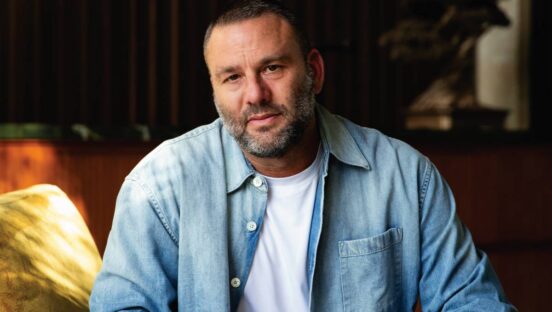

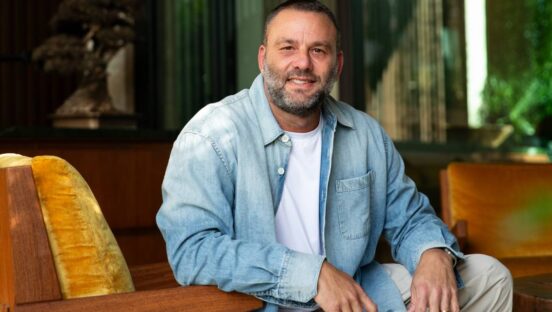
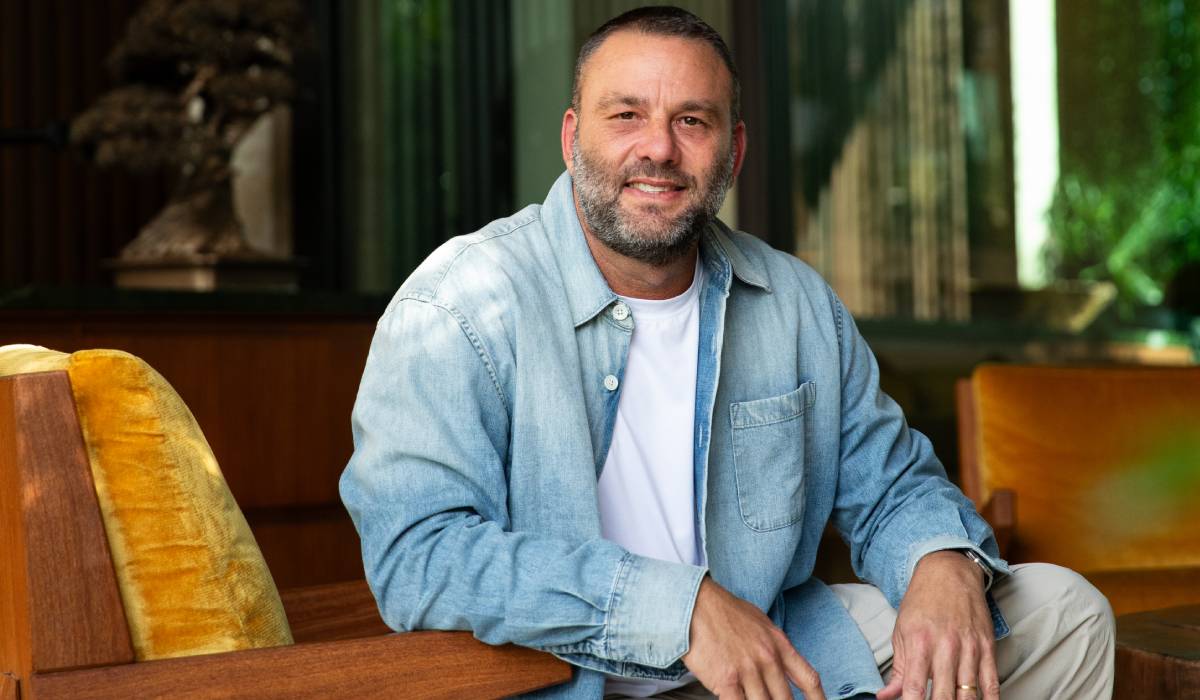
Restaurant operators, listen up: The nature of dining out is changing, according to David Grutman, who is credited with single-handedly transforming the global nightlife and hospitality scene. “No one eats an appetizer, soup, salad, main course, dessert—no one eats like that anymore,” he claims.
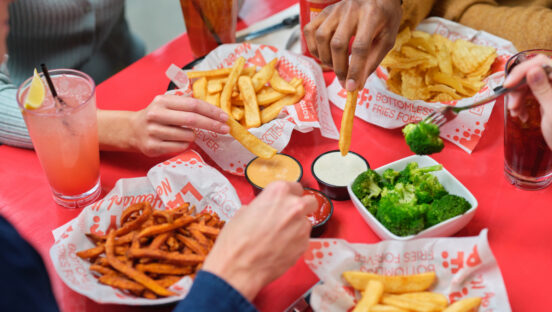
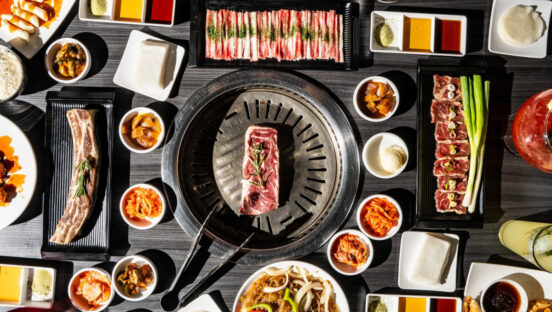
Instead, modern diners are migrating toward sharable plates that are inherently more experiential. “When you’re tasting different foods with people, it creates a certain energy, and I love that at a table,” he says. “They’re discovering something new, and they’re doing it together, and they’re talking and communicating.”
What reads as a strategic shift toward experiential dining is, in many ways, a return to Grutman’s earliest lessons in hospitality. Long before he was dubbed the “King of Miami Nightlife” by Forbes, Grutman’s career began behind the bar at Biz Bistro in the Aventura Mall. A finance graduate from the University of Florida who once intended to pursue a steady career in title insurance, he quickly found himself attracted to the high-stakes service industry. He transitioned from mall bartending to managing the Velvet Lounge in Fort Lauderdale, followed by a transformational five-year stint at the helm of Tantra in South Beach.
It was during these years—navigating the shifting moods of the velvet rope and the demands of celebrity guests—that Grutman mastered the social engineering required to anchor a room. By the time he co-founded Miami Marketing Group (MMG) in 2008 and launched LIV, he had evolved from a tactical operator into a strategic visionary, using his early experiences as a bartender to figure out exactly what a guest needs before they realize it themselves.
Grutman’s collective business properties under Groot Hospitality now span some of the highest-grossing-per-square-foot restaurants in the country. Headquartered in Miami Beach with concepts strategically placed across Miami, Dallas, and Las Vegas, the portfolio includes his iconic LIV nightclubs; a Japanese-inspired steakhouse in partnership with Bad Bunny called Gekkō; a Southeast Asian-inspired concept, Komodo; Papi Steak—which fuses Golden Era Hollywood with modern Miami and Vegas—and Casadonna (in partnership with Tao Group Hospitality), a coastal Italian-inspired waterfront restaurant in Miami.
“They all have a common DNA of energy levels and being in community. I’m in the fun business, so at the end of the day, they’re all about fun, and they all connect with each other that way,” Grutman says, adding that “just trying to do good and really trying to add value to people has really been my secret sauce.”
Grutman formed Groot Hospitality in 2018 to bring his concepts under one umbrella, as well as to bring “clarity” and the ability to scale. “Groot became the platform that allows us to build concepts with a consistent philosophy around hospitality, design, music, and energy,” he says. “It also gave us the structure to grow beyond Miami while still protecting what makes our experiences unique.”
Since its 2008 debut at the Fontainebleau Miami Beach, LIV has remained one of the most significant and highest-grossing nightclubs in the global hospitality landscape. Grutman’s first major ownership project helped redefine the Miami nightlife experience by merging the high-energy theater of a concert with the exclusivity of elite bottle service, ultimately generating annual revenues that exceeded $45 million at its peak.
Designed to be a 360-degree sensory environment, the venue became a blueprint for the hospitality group’s philosophy—where A-list celebrity presence, world-class EDM and hip-hop talent, and “see-and-be-seen” architecture create a constant stream of viral, shareable moments. The brand’s enduring cultural relevance led to its recent expansion into Las Vegas at the Fontainebleau resort, where both the flagship nightclub and the French Riviera-inspired LIV Beach continue to cement the brand’s legacy as a premier destination for immersive, high-impact entertainment.
Groot Hospitality’s powerhouse collective of next‑generation restaurants, lounges, nightclubs, and hotels are known for creating immersive environments that combine upscale dining, high-impact design, marquee entertainment, and shareable moments that effortlessly evoke FOMO (fear of missing out).
At Papi Steak, for example, a table ordering the now-famous “Beef Case” quickly becomes the center of attention: it’s a $1,000 diamond-studded gold briefcase holding a 55-ounce Australian Wagyu tomahawk steak. (The briefcase is apparently a nod to the one in Pulp Fiction that carried the soul of Marsellus Wallace.) The steak is presented with a laser light show and the diner’s choice of music, and the steak is “branded” at the table with a hot stake before returning to the kitchen to be carved and plated before returning to the table to enjoy.
What might otherwise be a simple food delivery transforms into a spectacle—and then becomes free marketing for the restaurant. Nearby tables turn, phones come out, and within seconds, the moment extends far beyond the guests who ordered it. (These over-the-top spectacles also attract celebrities like Drake and Rhianna.)
“People really eat by seeing first, so they love an aesthetic, they love a vibe, they love food that they could be able to post for their friends that have FOMO,” Grutman says. “All these [dining experiences] are engineered for people to be able to say to all their friends wherever they’re at, ‘Oh, look what you missed.’ We love to create FOMO. We love our guests to be able to create FOMO for their friends and family.”
With an all-encompassing approach that layers headline performances, curated interiors, strategic brand collaborations, and savvy social media storytelling, the concepts function as a connected ecosystem. And because those moments are rooted in real, high-energy experiences, they carry a level of authenticity that paid media often struggles to replicate. It’s not just about creating something worth posting—it’s about creating something worth being there for.
“A lot of operators still think in terms of just opening a restaurant. Today, you’re really building a brand and a community,” Grutman says. “People interact with your concept long before they walk through the door. They interact through social media, content, music, and design. Hospitality today lives both physically and digitally, and understanding that ecosystem is essential.”
That distinction helps explain why Grutman’s approach resonates so strongly with today’s diners, particularly younger audiences who prioritize experience over routine. The traditional format of dining—courses arriving in sequence, conversations contained within a single table—has given way to something more fluid and interactive. Dinner bleeds into nightlife. Music becomes as important as the menu. The line between restaurant and entertainment venue continues to blur—and that’s exactly where Grutman’s background becomes a strategic advantage.
Having come up through nightlife, he understands how to read a room in real time. He knows how to sense when energy is lagging, when it’s peaking, and when it needs to shift—an instinct that now informs how his restaurants operate. Music isn’t an afterthought; it’s programmed. Lighting isn’t static; it shifts and evolves throughout the night. Staff aren’t just trained in service mechanics, but in awareness—how to contribute to the overall rhythm of the space.
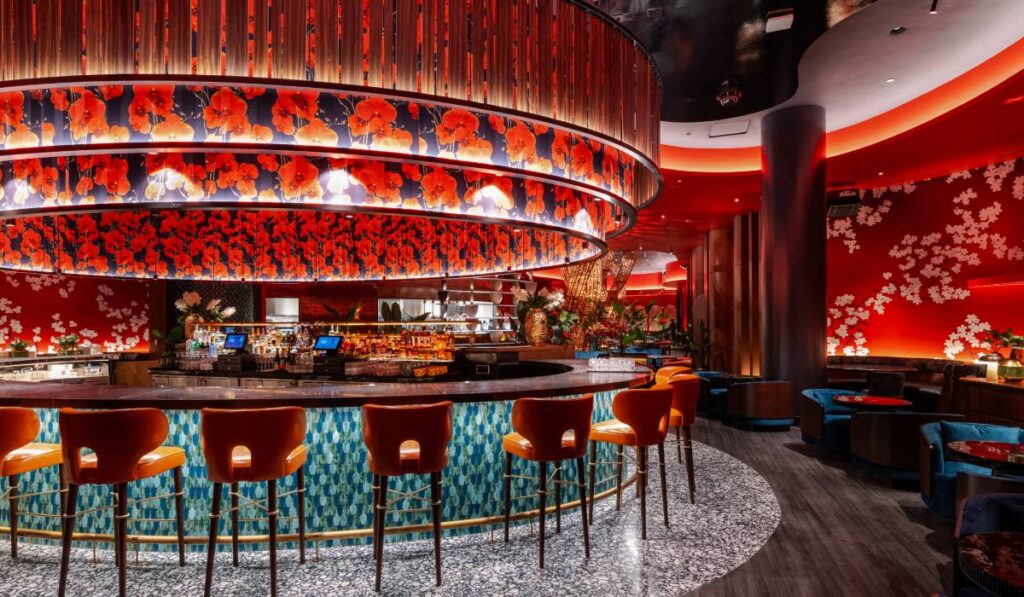
“When all of those elements work together, that’s when a place really becomes memorable,” Grutman says. “The magic happens when the cuisine, the atmosphere, and the service all elevate each other.”
Equally important for restaurateurs today is procuring amazing ingredients. Guests “really don’t want to be shorted on the ingredients, and they know when something is luxurious or when something is just kind of shoddy,” he notes.
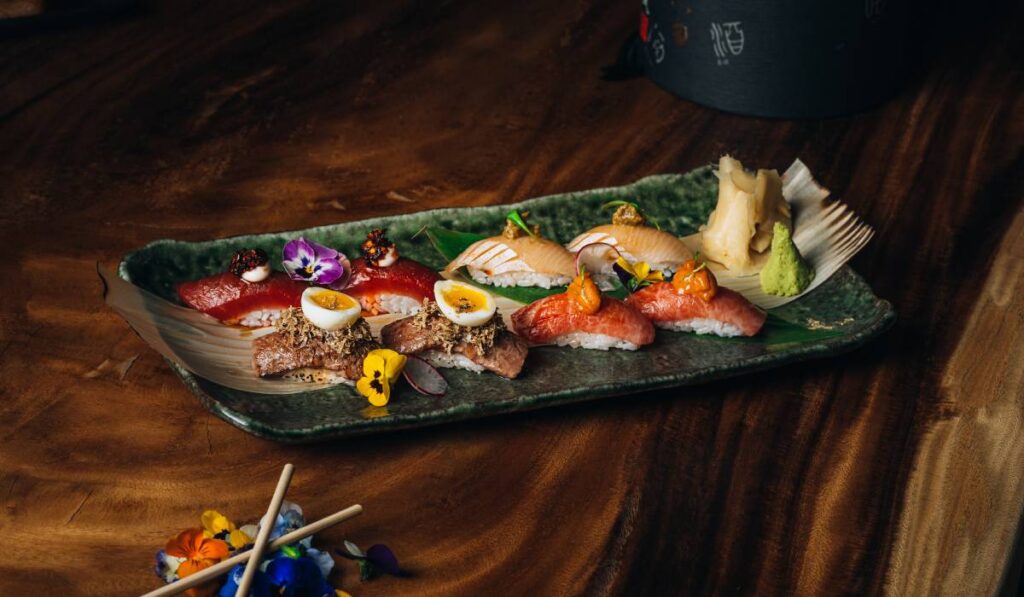
And when the product is of high quality, it justifies premium pricing. At Gekkō, for example, The Wagyu Experience with olive-fed snow beef imported from Japan’s Miyazaki Prefecture is $295, or guests can opt for a bone-in short rib with gochujang and pickles for $110. Maki and nigiri options round out the menu that also features entrees ranging from whole lobster with jah mama aioli for $92 to oak-smoked chicken with fennel, asian pear, and jerk marinade for $36.
Komodo—which has locations in Miami, Las Vegas, and Dallas—features chef’s omakase options like The Red Dragon ($180) with sashimi, nigiri, and maki, and #WhatTheFish for $48, which is a six-piece of chef-selected nigiri.
At Casadonna, the menu ranges from the Mediterranean branzino ($47) with leek caponata, pine nut, and mint vinaigrette, to a 34-ounce porterhouse steak ($197). Guests can also choose from six pasta options like the black truffle risotto ($38) with carnaroli rice and parmigiano reggiano, and the mafaldine astice ($42) with Maine lobster, cherry tomato, vodka sauce, and garlic breadcrumbs. Cold options like tuna tartare ($38) and hamachi crudo ($24) balance hot options like calamaria fritti ($26) and shrimp & ‘nduja ($41) with spiced Calabrian sausage, butter, lemon, and grilled focaccia.
High-impact, shareable items serve as anchors, drawing attention and setting tone, while more traditional offerings provide balance. Premium pricing, in turn, becomes part of the storytelling. When executed correctly, a $200-plus dish doesn’t just deliver on quality—it signals occasion, indulgence, and exclusivity. It tells guests that what they’re experiencing is not everyday dining, but something elevated, something worth documenting.
For all its spectacle, Grutman’s model is still grounded in a relatively simple premise: people going out want to feel something. “What are people really looking for? I think they’re always looking for escape,” he says. “We try to create worlds. When you come into our places, you’re transported to a different world, and it’s theater. It’s the fun business.”
Whether that escape comes in the form of a high-energy nightclub or a transportive dining room, the goal is the same—to create an environment where guests can step outside their routine and into a different world, even if only for a few hours.
That idea of escape also underscores why Grutman remains confident in the staying power of experiential hospitality, even as technology continues to reshape the industry. While AI can optimize operations and streamline decision-making, it can’t replicate the feeling of walking into a room that’s alive with energy, where every sense is engaged and every moment feels shared.
“We’re creating an experience for people,” he says. “And I don’t know if that’s something that could be replicated by a machine.”
His insistence on the human-focused element is the playbook Grutman has been running since day one. He worked his way up in the hospitality industry through building personal relationships, which he attributes as one of the main reasons for his success. It’s the reason why people show up to his grand openings, he says, and it’s the reason why people buy into his concepts. “It’s how I get people to populate my restaurants. It’s when I invest in a [consumer-packaged-good] brand, how I’m able to magnify the message on that to bring great people into deals,” he explains.
“I love being surrounded by the most creative people in the world,” Grutman says.
But perhaps even more important is his ability to connect with people at all levels and in all roles—not just those in powerful positions. “If I just talk to the celebrity or the power player in business at my dinner table and not everyone else at the table, I probably wouldn’t be here today,” Grutman adds. “So it’s just growing those relationships and knowing that to be authentic, go into it trying to ask [questions] and find out what their story is.”
That’s the thesis of his new book, “Take It Personal: How to Succeed by Building Relationships and Playing the Long Game,” which debuted on April 14. In his leadership manifesto, Grutman breaks down how he got to where he is today—by building relationships and businesses that last. Chock-full of behind-the-scenes stories from his career, the book is meant to be both entertaining as well as a practical guide for aspiring restaurateurs in accelerating their careers and unlocking their full potential.
“I called it ‘Take It Personal’ because that’s literally what I do—I take everything very personal, and I think then people tell you don’t take it personal, they’re not doing you justice,” he says.
The book is based on a college course on entrepreneurship that Grutman has taught for the past five years at the Chaplin School of Hospitality & Tourism Management at Florida International University. The class covers lessons Grutman has learned “through success and failure” on building brands, and the importance of IP and building relationships. “It’s a mix of lessons and things that you have to know as you are building brands, and how relationships can really magnify everything and are so important,” he says.
It also covers topics that Grutman wishes he would’ve known earlier in his own career. For example, “I wish somebody taught me about IP when I was starting out,” he says. “They don’t really talk about how important IP is and what it means, and setting yourself up to have more than just one place or one unit,” he notes. He also writes about the process of preparing for an acquisition and important things to know when bringing on a large business partner, inspired by his personal experience in the subject matter.
In 2019, Grutman sold a majority stake—51 percent—of Groot Hospitality to Live Nation Entertainment. The deal, which integrated Grutman’s high-touch hospitality ecosystem into the world’s largest live entertainment engine, marked a pivotal shift from a founder-led boutique firm into a globally scalable powerhouse. By aligning with a partner that dominates the concert and ticketing space, Groot Hospitality gained access to the infrastructure required to export Miami’s high energy to cities like Las Vegas and beyond.
Throughout the transition, Grutman has remained at the helm as CEO, treating the acquisition not as an exit, but as a “magnifier” for his personal brand of theater—demonstrating that even when operating within a corporate giant, the business remains personal at its core.
While the Live Nation deal provided the institutional muscle to scale, Grutman’s approach to the partnership—and all those that followed—remains rooted in a very specific hunt for complementary talent. For him, a successful alliance serves as a bridge between raw inspiration and operational excellence. The qualities Grutman looks for in any potential partnership is for the other party to bring something to the table that he doesn’t possess, whether it’s their creativity or particular thought process.
“I love being surrounded by the most creative people in the world,” he says, “and I think by identifying that and being able to see and take someone’s genius creation, and then being able to apply it to … something that’s a viable business is really special. I love that process.”
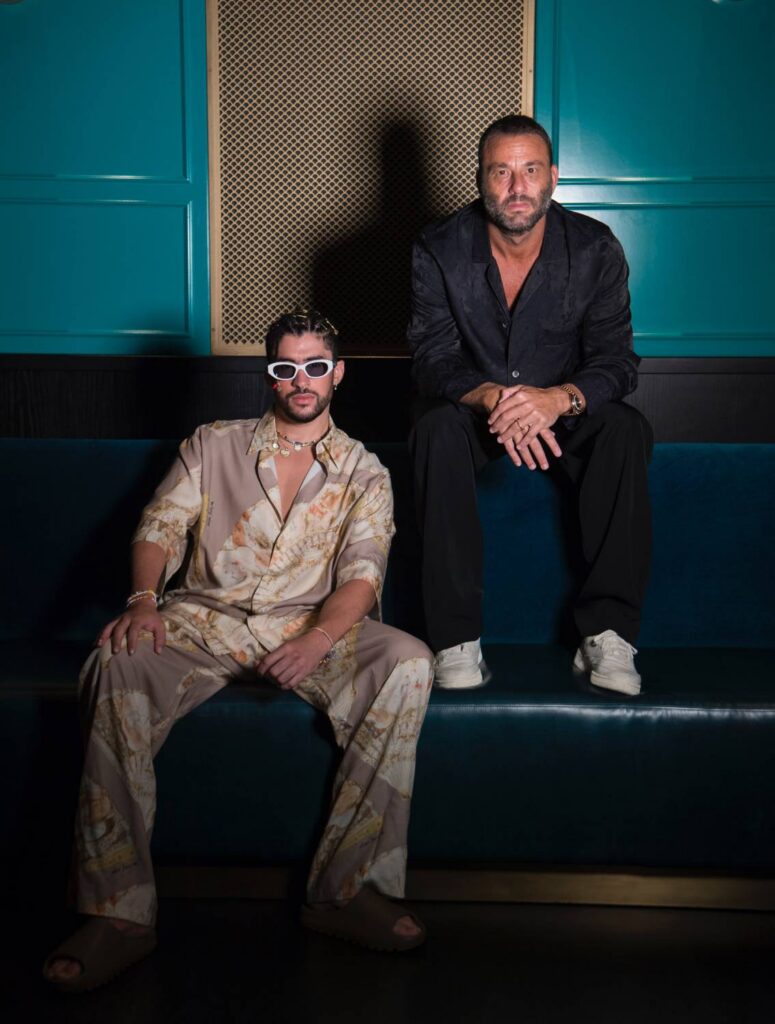
When it comes to partnering with celebrities, Grutman says one thing people might not expect is how collaborative those relationships really are. “With Bad Bunny, the conversations were always about culture and how to capture the energy of a moment,” he shares. “Those moments remind me that great hospitality is a creative process—it’s not that different from making music or producing a film.”
While some people might be starstruck meeting and working with so many big names, Grutman carries the confidence of knowing he deserves a seat at the table, which helps to ground him. “I’ve done this for so long that I have a pretty good confidence that I understand [and can] translate what they’re trying to get out into something else,” he notes.
The best partnerships bring authenticity, he adds. “When we collaborate with someone like Bad Bunny, it’s not just about attaching a name to a project—it’s about working with people who have a real creative perspective and cultural influence. They help shape the concept, the music, the aesthetic, even the storytelling around the brand. When it’s done right, the partnership adds depth to the experience.”
That storytelling is now expanding even further with the launch of DGN Studios, Grutman’s production company focused on film, television, and digital content. For him, it’s a natural extension of hospitality. “A restaurant tells a story through food, design, and atmosphere,” he says. “DGN Studios is just another way to tell stories—through a different medium.”
This leap into multimedia is the latest chapter in a career defined by a refusal to sit still. Even in his earliest days, Grutman was constantly looking for the “ceiling” in any given room, looking for the next place to break through. When he was 21 years old and a bartender, he saw the ceiling of staying in that role, and he wanted to be a leader—so he became a manager. “I think also, don’t be afraid to take a step back in order to take a step forward,” he notes. “When I was bartending, I was making great money, and when I took that manager’s job, I was paid a quarter of what I was making as a bartender. But I knew that by taking that step and being able to invest in myself—I’m always a big believer in investing in yourself—got me to where I am now.”
That belief in investing in yourself is now embedded in how he builds culture across every concept. When it comes to cultivating a strong culture across a growing organization with diverse concepts, Grutman contends that culture starts with energy and leadership.
As Groot has grown, he has tried to stay as present as possible with his teams, ensuring they understand the importance of true hospitality and taking care of others. “When your team feels proud of the environment they’re part of, that translates directly to how guests feel when they walk in,” he says. “It’s something we work on constantly.”
After building some of the most recognizable venues in Miami, Las Vegas, and beyond, what still excites Grutman about opening a new concept is the blank canvas, he says. “Every concept starts with an idea; sometimes it’s a type of cuisine, sometimes it’s a space, sometimes it’s just a feeling you want people to have. Seeing that idea slowly come to life through design, food, music, and people never gets old. The moment when the doors open and guests experience it for the first time is still the most exciting part.”
As far as new markets go, Grutman is looking at potentially expanding Groot Hospitality into Nashville, Tennessee, and Scottsdale, Arizona. ”We’ve secured no deals in either market,” he clarifies, “but it’s something that’s really on our radar screen, and two places that we’d really love to be in.” He’s also setting his sights globally in locations like the UAE and Southern France.
When people look back at Grutman’s impact, he hopes they will say he pushed the hospitality industry forward and created places where people could celebrate life together. “At the end of the day, restaurants and clubs are about bringing people together—friends, families, and strangers who become friends,” he says. “If we’ve created spaces where people made great memories and entertain, that’s the legacy that matters most.”
When it comes to his personal legacy, Grutman also points to his family and his love for taking his 6-year-old and 8-year-old daughters to dinner at his own restaurants. “They start to look at the details, and they see that lightbulbs are out and stuff like that—they can’t wait to show me any kind of detailed thing at the restaurant,” he says. “And I love when we go out to eat somewhere else and maybe they haven’t bussed the table quick enough, and my daughter will be like, ‘Daddy, our table is very dirty.’ It tells me they’re starting to get the details.”
At the same time, he has no plans to push the busy life of a restaurateur on them if they aren’t passionate about it. “I’d like for them to be able to get some free time in their lives, and in this business, you get zero. But if they love it, they love it,” he adds.
When it comes to balancing work and family life, it comes down to paying attention to the people you’re with. “You just have to be present when you do spend time with your family,” he says. “It’s better to give them an hour of undivided attention than five hours of just being on your phone and not really paying attention.”
His advice for budding entrepreneurs in the restaurant or hospitality industry is to focus on the guest experience above all else. “Trends change, menus evolve, neighborhoods shift, but if people feel something when they walk into your space, they’ll come back,” Grutman adds. “Also, be patient. Building something meaningful in hospitality takes time and resilience.”
For operators, the takeaway isn’t necessarily to replicate Groot Hospitality’s model in full. Not every concept can—or should—operate at that level of scale or intensity. But the underlying principles are increasingly hard to ignore. Guests want more than a meal. They want connection, stimulation, and a reason to come back—and to bring others with them.
In that sense, Grutman’s “formula for FOMO” isn’t just about exclusivity or spectacle. It’s about understanding how modern consumers assign value, and then building environments that meet them there.