
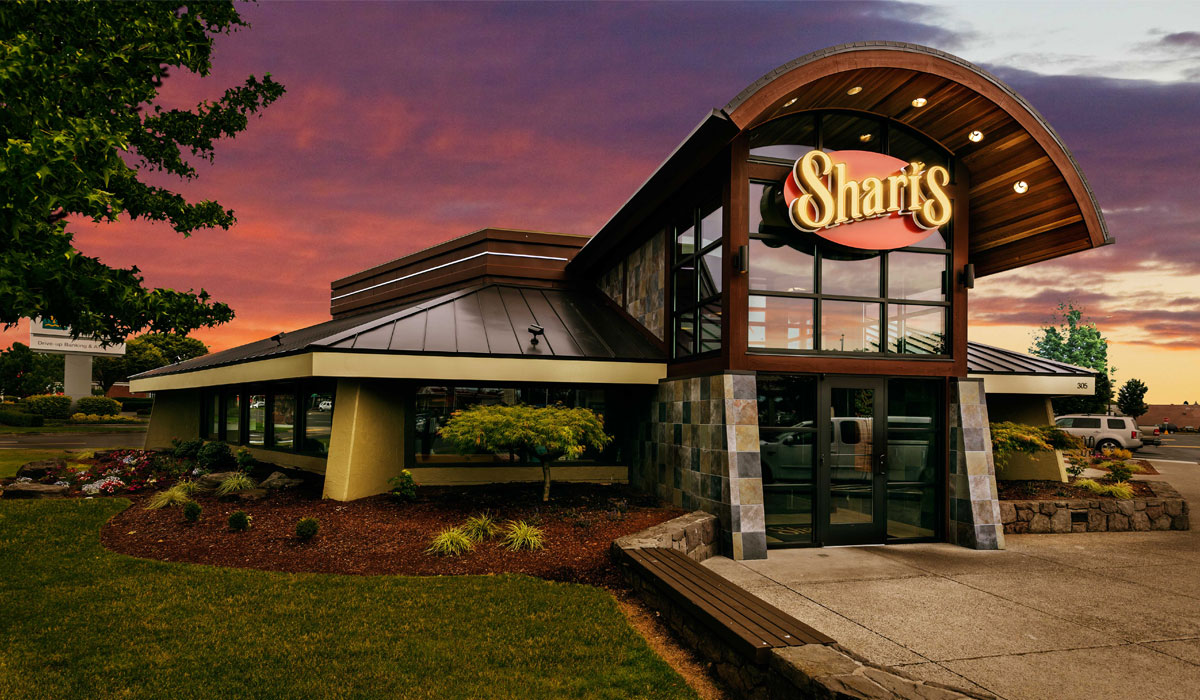
Shari’s and Coco’s Bakery parent Lena Brands filed for bankruptcy earlier this month, blaming an unsustainable debt load, frozen delivery-platform funds, and mounting financial obligations inherited during its acquisition of the struggling family-dining chains.
Integral to the case is a growing reliance on merchant cash advance financing, or MCA debt, which the company said ultimately overwhelmed its ability to operate normally.
Lena Brands currently oversees about 11 remaining Shari’s and Coco’s locations across California, Washington, and Idaho, employing roughly 235 workers. The company acquired the restaurant operations in October 2024 from prior owner Gather Intermediate Holdco through a creditor-led restructuring process.
Owner Sam Borgese—an industry veteran whose resume includes leadership roles at Logan’s Roadhouse, Max Brenner, Charlie Brown’s Steakhouse, and Coco’s parent Catalina Restaurant Group—said the company entered the acquisition already burdened by significant liabilities.
According to the filing, Lena Holdings assumed approximately $1.5 million in past-due rent obligations, about $1.45 million in sales tax liabilities, and additional obligations owed to Libertas Funding.
To fund operations and cover those inherited liabilities, the company turned to MCA lenders, eventually accumulating roughly $5.16 million in obligations across about 10 funders. Many of those agreements gave lenders claims over future restaurant sales, including revenue flowing through DoorDash and Grubhub.
The situation escalated when two MCA lenders filed claims not only against Lena Brands, but also against Stripe, the payment processor handling the company’s delivery-platform transactions. According to the filing, that led Stripe to freeze approximately $650,000 in payments owed to the restaurant operator.
Borgese said this move restricted “a critical cash-flow stream and contributing to the need for an expedited bankruptcy filing.”
The company plans to go to court to try to get the money released, arguing the frozen funds belong to the business and should still be accessible during bankruptcy.
Libertas Funding, the company’s main secured lender, is owed about $1.66 million. Another nine MCA lenders are collectively owed an estimated $3.03 million.
Lena Brands also owes approximately $715,000 to distributor US Foods.
The company is seeking court approval to continue using cash collateral to fund payroll, vendor payments, utilities, taxes, and restaurant-level operating expenses while it restructures. Borgese said the company’s remaining restaurants still generate meaningful revenue, but that constant collection pressure and frozen payment streams left management unable to focus on stabilizing the business.
“I authorized and directed the Debtors to commence these cases because their debt burden had become unsustainable, deprived the business of needed liquidity, and diverted management attention from operations,” Borgese wrote.
Borgese said management has already identified opportunities to reduce insurance costs, improve payroll controls, and streamline operations as part of a broader turnaround effort. The company is also in discussions regarding a potential $400,000 debtor-in-possession financing facility. Borgese added that he may personally contribute capital if necessary to maintain operations during the restructuring process.
The bankruptcy marks another difficult chapter for family-dining brands that have struggled to recover traffic and profitability in the years following the pandemic.
Shari’s and Coco’s once operated hundreds of restaurants across the western U.S., but years of declining sales, inflationary pressure, labor challenges, and growing financing burdens dramatically reduced their footprint.
The case also highlights a growing issue within the restaurant industry surrounding MCA financing. While MCA products have become common among distressed operators seeking quick liquidity, restructurings involving frozen receivables, competing liens, and disputes over delivery-platform payments have become more prevalent in restaurant bankruptcies. Some recent examples include a 43-unit Subway franchisee, a multi-unit Farmer Boys franchisee, and a 22-unit Del Taco franchisee.