
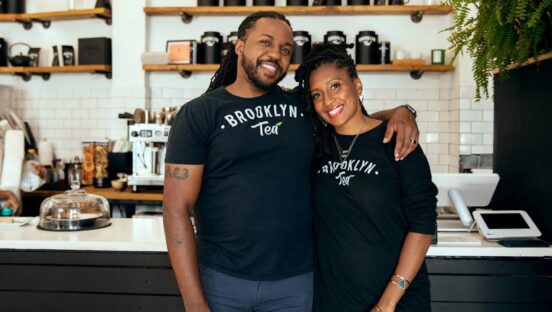
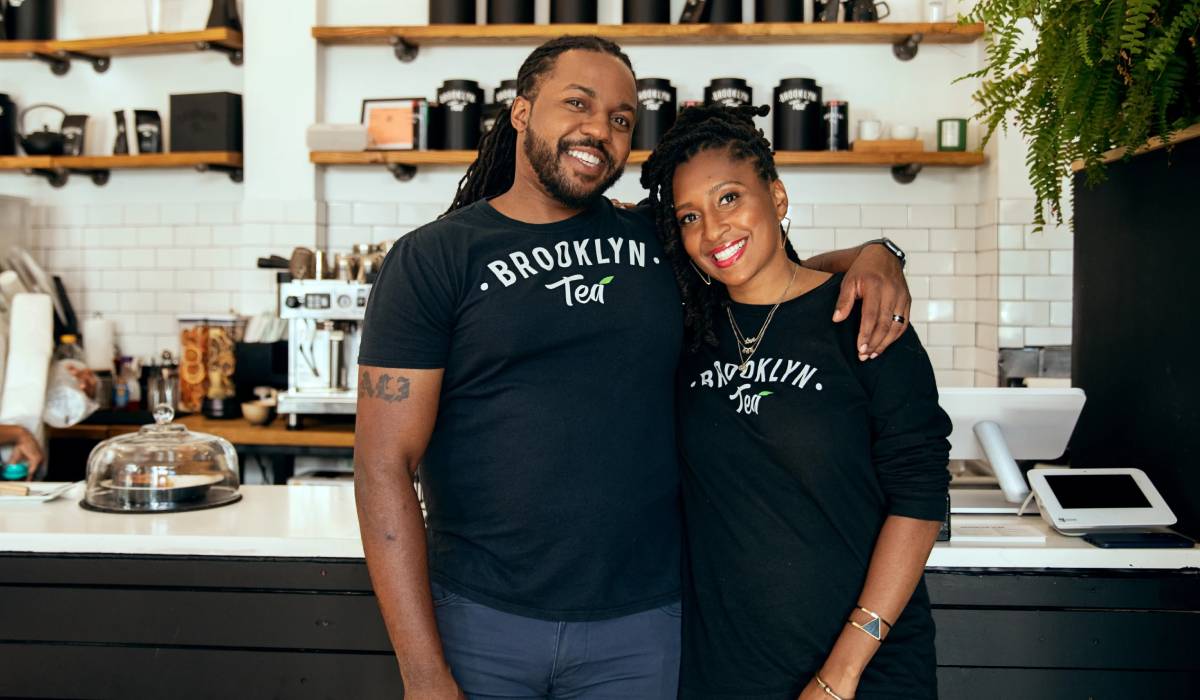
Brooklyn Tea, founded by husband and wife, Jamila and Alfonso “Ali” Wright, expanded significantly, evolving from a beloved local favorite into a nationally recognized brand with various locations, tasting rooms, and even an airport presence launching this month. Their initial vision was to introduce a global tea experience to their Brooklyn community.
Being born and raised in Brooklyn, I witnessed the expansion of Brooklyn Tea and appreciated the unique tasting experience that has brought the world of different teas and cuisines to our local Bed-Stuy community. The shop offered an intimate and personable way to sample teas from places like South Africa and Japan, complete with a teacup, a “tea timer,” and a lovely atmosphere. Beyond the tea, they elevated the experience by serving comfort food items, including their sought-after chicken and vegan wraps, freshly baked banana bread, muffins, breakfast sandwiches, and more. I had a conversation with Jamila and Alfonso “Ali” in their Bed-Stuy tea room to hear their story of how they began and transformed Brooklyn Tea into a national brand.
What motivated you both to establish Brooklyn Tea, a brand rooted in culture, community, and quality?
Brooklyn Tea was founded on a simple yet powerful belief that tea is more than just a beverage. It is a ritual, a moment of pause, and a bridge between cultures. At its heart, Brooklyn Tea exists to elevate everyday experiences through thoughtfully sourced teas, intentional hospitality, and spaces where people feel seen, welcomed, and inspired to slow down.
As a couple, we were drawn to tea not just for its flavor, but for its history and its role in communities across the world. We wanted to build something that reflected our values of care, craftsmanship, and community while also challenging the idea that premium tea had to feel exclusive or disconnected from culture. Brooklyn Tea was born out of our Brooklyn neighborhood, but from day one, it carried a global perspective. Every blend, every menu item, and every space we create is rooted in quality and storytelling, with deep respect for where tea comes from and where it is going.
What amount of capital was needed to start Brooklyn Tea, and when did you realize it was the right time to scale or pivot for long-term growth?
The business began with a deep sense of ownership and responsibility. We self-funded Brooklyn Tea with approximately $70,000 from our savings, friends, and family, including the difficult decision of depleting our 401(k)s. The first true test of scale came unexpectedly during COVID when the producer of Grey’s Anatomy, Scandal, and Bridgerton’s award-winning Shonda Rhimes tweeted that she had purchased our teas, and overnight, demand surged from roughly ten online orders a day to well over 100. While the spike eventually stabilized, it exposed the gaps in our systems and forced us to confront a reality many small brands face: growth can arrive before infrastructure is ready. Rather than chasing the moment, we restructured operations, refined fulfillment, and strengthened internal processes. As our visibility grew, large retailers such as Wegman’s and Target approached us with pricing and extended payment terms, which are often net 30 to net 120, would have placed unsustainable pressure on our margins and cash flow. For a small business, those deals can quickly translate into debt rather than growth.
Saying no was necessary, reinforcing a core lesson: growth must be profitable, paced, and aligned with the long-term health of the brand. Scaling back, or choosing not to scale, can be just as strategic as expansion when sustainability is the goal.
Which of Brooklyn Tea’s menu items best represent its identity, and how do you approach developing new items and tracking best sellers?
We use data, including point-of-sale and wholesale analytics, to understand which blends consistently perform and which limited offerings generate excitement. We focus on teas that balance familiarity and discovery, welcoming new drinkers while appealing to experienced customers. Our South African Honeybush with apricot and peach is a prime example; it began as a limited release and is now one of our best-selling teas. Our menu is intentional, approachable, and rooted in craft. Signature teas like Cream Earl Grey and Kyoto Cherry Rose Sencha highlight nuance, while offerings such as strawberry matcha and comfort foods like banana bread show how tea culture integrates with everyday life. New items must deepen the experience, align with our brand values, and complement our teas. Permanent staples are thoroughly tested and refined through customer feedback to ensure they elevate the ritual.
How do you approach global sourcing in a way that maintains quality, honors, and builds meaningful relationships with growers?
We approach sourcing with humility and responsibility. Tea carries deep cultural significance, and we believe it is essential to honor those traditions rather than flatten them for mass appeal. We work with trusted importers and growers who share our commitment to quality, ethical practices, and transparency. That means prioritizing origin integrity, seasonal variation, and long-term relationships over convenience or short-term cost savings.
We take time to learn the stories behind the leaves, including how they are grown, harvested, and processed. That respect carries through to how we present tea to our customers. Our goal is not simply to sell tea, but to act as thoughtful stewards of its legacy.
Which brand partnerships have had the biggest impact on Brooklyn Tea’s growth, and in what ways did those collaborations support your business?
Brand partnerships have played a critical role in Brooklyn Tea’s growth, particularly because we are rooted in New York City, where influential brands and cultural institutions operate as local neighbors; We were able to strategically partner with global brands including Fiserv, Mastercard, Nike, and Apple, as well as local nonprofit organizations, neighborhood schools, and community groups that helped with expanding visibility and revenue. Our business partnerships with national retailers such as Target and Wegmans were transformational; these relationships required us to elevate every aspect of our business, from supply chain readiness and packaging standards to pricing discipline and operational consistency. Entering those spaces validated our ability to compete at a national level while still protecting our brand values. Cultural partnerships have been equally impactful; collaborations with organizations such as CultureCon and AfroPunk placed Brooklyn Tea at the intersection of culture, creativity, and community. These moments were not about scale alone; they introduced our brand to audiences who immediately understood what we stood for and why it mattered.
Your expansion into JFK Airport is a major milestone. Can you take us behind the scenes of how that opportunity unfolded and what restaurants should know about navigating airport concessions?
Our path to JFK truly felt serendipitous. A fellow small business owner, whom we affectionately call a “business cousin,” invited us to attend an Airport Concessionaires Information Session at a community college in Queens. It was similar to a job fair, but instead of job seekers, the room was filled with small businesses and representatives from the large operators that run airport concessions. While most attendees headed to the main hall for a formal presentation, we felt compelled to stay behind and speak with one additional representative. That conversation became the turning point. That was when we quickly discovered that the book we were reading at the time, “Unreasonable Hospitality,” was also a favorite of the representative from HMSHost, one of the world’s largest concession operators. That shared language around service, intention, and care immediately created a connection.
At the time, HMSHost was seeking locally owned businesses to represent each borough as part of a new “local for local” concept launching in JFK Terminal 4. Our name, our commitment to building a values-driven company, and the simple coincidence of reading the right book at the right moment helped us stand out among hundreds of businesses vying for attention.
A few months later, we received an email offering us a licensing deal for the Brooklyn Tea and Market concept. We are excited because this month, that journey comes full circle with a ribbon cutting at JFK, marking a milestone that began with a conversation, curiosity, and the willingness to stay in the room just a little longer.
When entering the licensing deal with HMSHost at JFK, what truly makes a licensing deal a good one for a local business, and what should you look for when choosing a licensing deal?
We chose a licensing deal because it offered the lowest barrier to entry into a highly complex and capital-intensive environment. Airports operate very differently from traditional retail, and licensing allowed us to enter the space without overextending our team or balance sheet before fully understanding those dynamics. The structure is similar to a franchise agreement, where HMSHost’s operational expertise, infrastructure, and airport-specific systems pair with our brand positioning, hospitality standards, and high-quality product. That division of responsibility was critical. HMSHost manages the operational execution, compliance, staffing, and logistics, while we remain focused on protecting the integrity of the Brooklyn Tea brand, the guest experience, and the product itself. Financially, the model made sense. Airport buildouts and ongoing operating costs are significant, and as a small business, it was important for us to share both the costs and the risk. Licensing allowed us to participate in a major opportunity while maintaining financial discipline and long-term sustainability. We view this deal as an entry point rather than a one-size-fits-all solution. As we continue to grow and gain more experience in airport retail, we may pursue different partnership structures in the future. But for our first airport location, licensing was the right fit because it balanced access, operational support, and risk in a way that allowed us to grow responsibly.
Brooklyn Tea has consistently invested in its community, including your support of HBCUs. What inspired this work, and how does it connect to your larger mission?
We are proud graduates of Historically Black Colleges and Universities (HBCUs), from Spelman College and Hampton University. Those institutions played a formative role in shaping not only who we are as individuals but also how we approach leadership, community, and responsibility as business owners. In our first profitable year, we established an annual $500 scholarship for a rising high school senior planning to attend an HBCU. While modest in scale, the intent is meaningful. We know firsthand the financial pressures many students face, and our goal is to ease that burden in whatever ways we responsibly can. For us, this work is not performative or symbolic. It reflects a long-term commitment to investing in future leaders and honoring the institutions that helped make Brooklyn Tea possible. As we grow, so does our aspiration to expand and ensure that success is shared and reinvested into the communities that continue to support us.
For entrepreneurs hoping to enter airports or expand into new markets, what advice would you give?
As we explored both airport concessions and CPG, we made a conscious decision to learn as much as possible before committing. When entering CPG, we participated in a Target accelerator program that helped demystify an industry that was completely new to us. That experience gave us critical insight into pricing structures, retailer expectations, operational requirements, and the realities of scaling for large national partners.
We took the same approach when pursuing the airport space. Before entering into a deal at JFK, we completed the Airport Concessionaires Accelerator Program. That education was invaluable. Airports operate under an entirely different set of rules, timelines, and compliance standards. Understanding that landscape ahead of time allowed us to move forward with confidence rather than guesswork.
Expansion should never be about chasing opportunity alone. It should be about preparation. When founders invest in learning first, they are better equipped to recognize which opportunities align with their strengths and which ones could put the business at risk. Sustainable growth comes from being informed, intentional, and honest about what your company is ready to support. We believe partnerships are essential because growth does not happen in isolation; when approached intentionally, collaboration allows a brand to expand its reach, deepen its impact, and grow in ways that are both sustainable and culturally resonant.
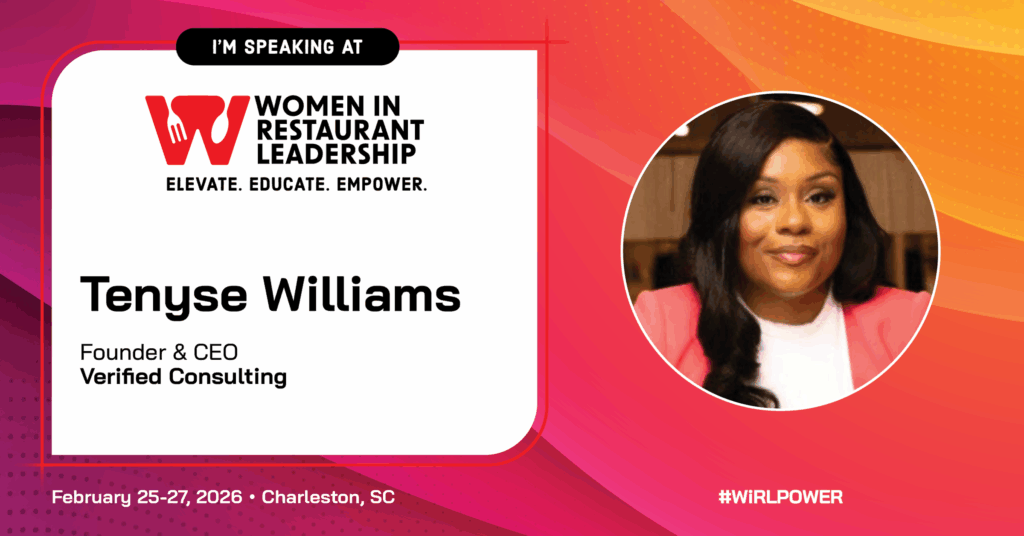
Tenyse Williams is an award-winning Brand Strategist, an Adjunct Instructional Specialist at Columbia University and George Washington University, and Founder & Chief Communications Officer of Verified Consulting, leading a team of digital marketing professionals amplifying awareness for their clients. Follow her on LinkedIn.