
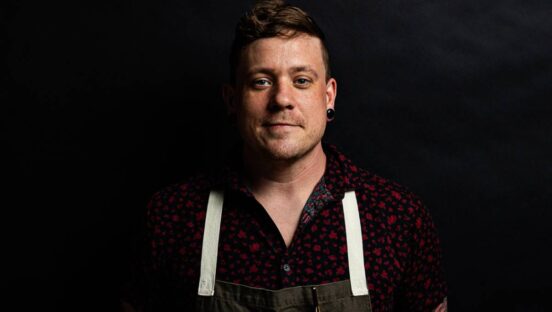
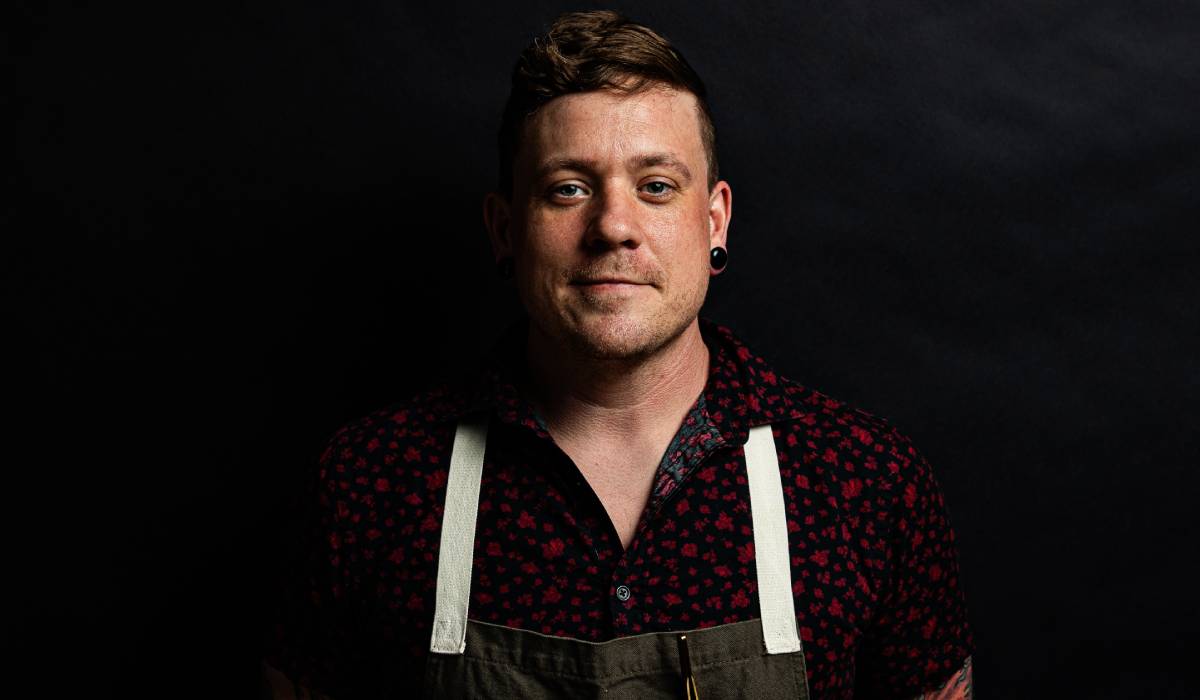
Graham House candidly admits he never expected to work in a hotel restaurant before Luminosa, having built his chef’s resume centered around small, local independent concepts. A proud native of Western North Carolina, House grew up in Brevard, a small city outside of Asheville, in a working-class family where his mother was a public school teacher and opportunities were limited. At 15, he took a dishwashing job at a barbecue joint to save up for a car. “I started the next day,” he recalls. “I hated it, so I wanted to move up to the line so I was making salads.”
Looking back now as a 38-year-old, House never imagined that dishwashing job would be his entry into a professional hospitality career. He tried culinary school for one semester, but he hated that, too. “I was shit in school, to be honest with you. I just didn’t learn well sitting in a classroom,” he says. So when he turned 18, House moved to Atlanta, knocked on some doors, and got a job at the Italian restaurant Pricci in Buckhead, led by chef Piero Premoli. “He was a hardass, but he taught me a lot,” House says.
His winding path took him to international culinary opportunities in Italy and Greece, as well as gigs on the West Coast in Napa and San Francisco, California—but he always gravitated toward locally-focused kitchens with strong community connections. He met his now-wife, a San Jose native, at a barbecue while in California. After House’s mother suffered from a stroke, the couple moved back to his home state in Asheville to be closer to her in 2016, and House took over the kitchen at Sovereign Remedies, a hip cocktail bar where he built out the food program from scratch.
- Favorite ingredient to forage: Ramps and mushrooms
- Favorite fish to catch? Brown Trout
- Most underrated Appalachian ingredient? Sumac
- Any surprising hobbies? Working on old cars
- What’s playing in the background when you cook? Anarchist podcasts
“They wanted to build a food program in the tiniest closet auxiliary kitchen you’ve ever seen. I had one induction burner, a table-top convection oven, a tabletop Fry Daddy tiny little thing, and two reach-in coolers and one ice chest freezer. Honestly, it was a weird transition for me,” he admits. “I had come from mainly Michelin-starred restaurants, and then I was working at a cocktail bar.”
Because of his lack of storage space, he was making trips to the local farmer’s market four times a week to buy fresh ingredients—but the hard work soon paid off as Sovereign Remedies began gaining traction. House found that being out and about in the community so often was actually great word-of-mouth marketing for the restaurant. “I was buying the last of the baby carrots out from whatever yoga mom, and that was how I got my face out there, and people started being like, ‘Oh, you’re taking those to Sovereign,’ so we started getting a lot of traction.”
The buzz broadened to wider recognition and an article in The New York Times, which led to an invitation for him to cook at the James Beard House in New York City for a Modern Appalachian dinner in 2018—a testament to his growing national influence and culinary voice.
House left Sovereign Remedies in 2020 with the aim of opening his own restaurant, and was about to sign a lease in March when COVID hit. “After having a total existential crisis and mental breakdown, I just jumped into some other stuff,” he says. He pivoted and started working at Asheville’s Chop Shop Butchery, helping them with catering and opening a food truck—but eventually, he missed the full-service food scene.
House found himself at a crossroads. The city’s food landscape, while promising, lacked the innovative spaces he craved. So when The Indigo Road Hospitality Group announced a project in Asheville, House was intrigued because of his familiarity with founder Steve Palmer and his strategic approach to opening restaurant concepts that seamlessly integrate into communities and prioritize local sourcing.
The opportunity became even more serendipitous when he discovered Sean McMullen, his high school friend, was set to be Luminosa’s chef de cuisine. Their shared history and complementary skills made for a perfect partnership. Over the year preceding Luminosa’s opening, they traveled together with Indigo Road, troubleshooting restaurant operations across the Southeast and developing an intuitive working relationship.
House’s connection to Asheville, combined with the restaurant’s commitment to supporting local farmers and maintaining a hyperlocal ethos, ultimately made the hotel restaurant concept feel like a natural extension of his culinary philosophy rather than a departure from his independent restaurant roots.
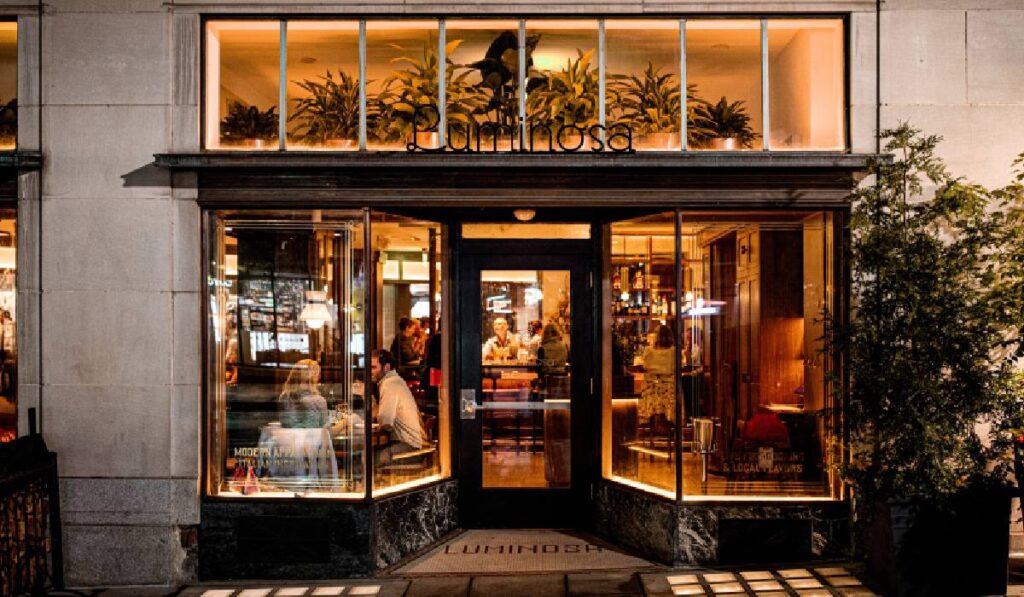
Nestled within the distinctive triangular architecture of The Flat Iron Hotel, Luminosa blends Italian techniques with hyperlocal Appalachian ingredients crafted in a wood-burning oven and grill, creating a unique dining experience that’s as modern and innovative as it is deeply steeped in tradition and respect for place.
Under House’s leadership as executive chef, Luminosa defies traditional hotel expectations. With a deliberate 70/30 split favoring local diners, the restaurant has quickly become a community cornerstone, where guests can expect dishes that not only showcase the region’s seasonal bounty but also tell a story of sustainable sourcing, whole animal butchery, and respect for local producers. The restaurant’s commitment to creativity means no menu item is repeated from the previous year, ensuring each visit offers a unique exploration of Appalachian and Italian-inspired cuisine.
The kitchen, equipped with a dedicated pizza oven and pasta extruder, transforms daily deliveries of local produce—sometimes up to $5,000 worth of vegetables from regional farmers—into dynamic, ever-changing menus.
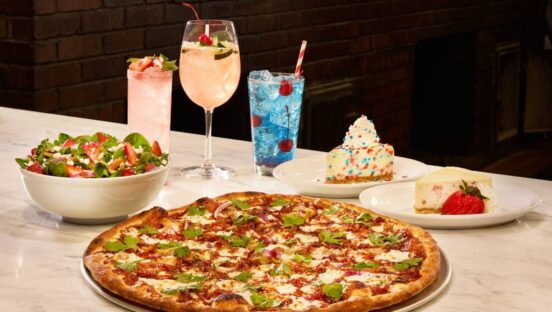
Examples from a recent menu include elevated antipasti options like Apple Brandy Beef Carpaccio with smoked trout tonnato, arugula, and carrot; primi offerings like Campanelle with smoked eggplant, purple komatsuna, tomato, and pecorino; secondi options like bone-in pork chops, ribeyes, and wood-fired Lion’s Mane mushroom; and contorni options like Brown Turkey Figs with smoked sungold yogurt, marcona almonds, kudzu, and fig leaf. The pizza menu also rotates but includes mainstays people can easily recognize, such as the classic Margherita with San Marzano DOP tomato, mozzarella, basil, and olive oil.
House collaborates closely with area farmers and purveyors to craft a menu that tells a story of seasonality, of heritage, and of place. “Things change so quickly in Asheville as far as seasonality goes. We have products in season for a week—serviceberries, chanterelles after a big rain. Being quick on our toes and able to print menus every day was one of the main things that I really wanted,” House notes.
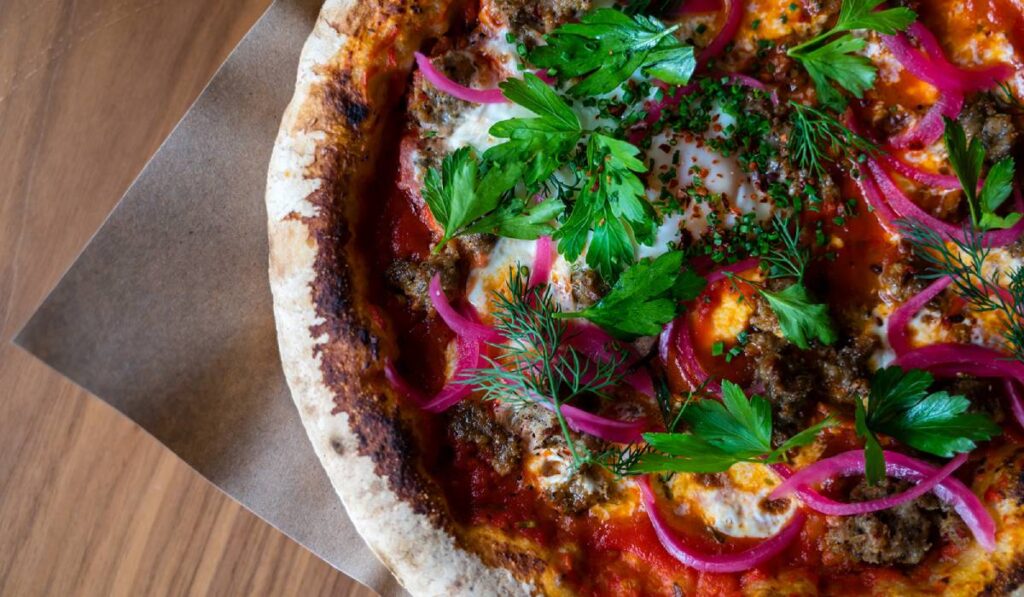
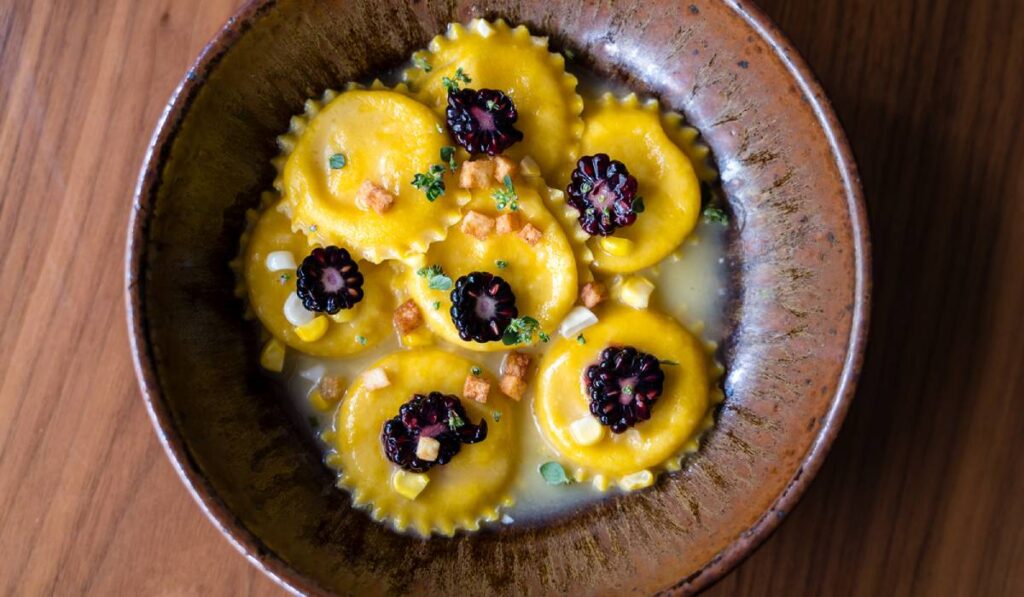
“On Wednesdays, our menu gets pretty slimmed down, but it’s this fun hybrid between an Italian restaurant and a steakhouse. Sean and I cook very vegetable-forward. We treat vegetables like a protein—we give them the respect they deserve,” he continues. “We have a contorni section—six to ten items—that are pretty much standalone vegetable-forward dishes treated like sides. That’s where we really let all the beautiful produce shine.”
Despite technically being a “hotel restaurant,” House and his team have curated a local, communal feel and vibe at Luminosa through genuine hospitality—something that’s becoming somewhat of a lost art form recently. “We do the fun things, like if somebody mentions something they really like that’s not on the menu, we’ll throw something together and surprise them,” he says.
“We know our people’s names when they show up at the door. We have special place settings for regulars. We put in the hard work—Googling, figuring out birthdays even if they’re not in the reservation,” House adds. “When you have a front-of-house team that is bought in, they can convince even the most curmudgeonly old folks from Florida wanting grouper to try something new. It’s a willingness of our clientele to buy in, but it’s also a drive for our front-of-house team to make people see what we’re doing and make people respect how special it is.”
In Asheville’s evolving culinary landscape, House stands as a bridge between tradition and innovation by preserving a culture, supporting a community, and reimagining what Appalachian cuisine can be.