
David Pace, a former Jamba CEO and president of Carrabba’s Italian Grill, served as chair of Red Robin’s board for more than five years, or close to 2,000 days, before stepping in as CEO in late April 2025. He understood the business and Red Robin’s evolution under departing executive G.J. Hart. And he had an idea of how he might hit the ground running.
So, when Pace’s “First Choice” plan formed in Q2, he stressed a pillar you don’t often see in turnarounds: Pace wanted to “hold serve.”
In an interview with FSR, Pace says Red Robin’s goal to boost traffic and return to growth needed to begin by acknowledging the extensive work done to get to this point. With Hart, a former Texas Roadhouse and California Pizza Kitchen CEO (now with SPB Hospitality), the casual chain installed a five-point “North Star” approach that included everything from improving 85 percent of the menu to adding flat-top grills to layering labor back into service touchpoints.
A LOOK BACK: Inside the Revival of Red Robin and a Bottomless Well of Opportunity
Red Robin previously drifted from some of the principles late CEO Michel Snyder crafted around “Unbridled Generosity” and elevated product at an affordable price.
Red Robin responded during Hart’s tenure by upgrading sauces. Pickles. Pineapples. Tomatoes. Moving from a frozen pre-vetted chicken breast to hand-battering in-store. Bacon left the microwave. And on the effort went, from the most granular of points to larger ones.
“I was just like, we can’t afford to give any of that back,” Pace says.
MORE:
Red Robin’s Low-Cost Burger Play Lures Back Guests
Comeback-Driven Red Robin Joins the Casual-Dining Value Wars
Red Robin Outlines New ‘First Choice’ Strategy to Fund Growth, Fix Restaurants, and Win Guests
Yet the casual chain had work to do. His vision was a “yes and” model designed to keep Red Robin moving. Publicly traded companies can often get into a habit of comping quarter to quarter and bouncing back and forth, Pace says. He wanted to progress Red Robin’s culture from a circular approach to “let’s go win again.”
“And keep building on it,” he says. “It was as much cultural in messaging as anything when I started out. I wanted to establish that philosophy. And so far, [our] teams have done a great job.”
Across 2025, Red Robin’s same-store sales decreased 0.3 percent. That included a 3.8 percent drop in traffic, 0.7 percent slide in menu mix, and 4.2 percent benefit from net menu pricing. The uptick from the latter declined steadily throughout the year (more on this later) as Red Robin retrenched value.
Restaurant-level operating profit margin was 12.7 percent, a 190-basis-point year-over-year improvement. Adjusted EBITDA rose 53 percent to $69.7 million.
Red Robin began to see a traffic inflection over the back half of 2025 as it rolled off 2024 pricing actions and witnessed its Big YUMMM (starting at $9.99) deal gain footing.
In Q4, same-store sales declined 3.3 percent (3.6 percent decrease in traffic and 0.3 percent boost in check).
Trends, like much of the sector, softened in October and November relative to Q3 and Red Robin made the decision to shift marketing spend into the year’s final month to maximize reach during the holidays. That proved effective, Pace says, as increased support behind Big YUMMM and seasonal promotions “drove a notable inflection,” with Red Robin outpacing Black Box’s casual-dining traffic index for the first time since Q3 2024.
And momentum carried into January, where traffic reported positive ahead of winter storms.
Speaking to profitability, Red Robin was able to chart progress despite net pricing contributing just 1.6 percent in Q4. That, Pace says, suggests Red Robin’s improving performance is being fueled by a stronger consumer proposition and operating efficiency—the roadmap he had from the outset.
Reducing labor and larger costs without a corresponding decline in guest satisfaction has been a promising development, he notes. That’s the “hold serve” element at work, too.
During this past period, Red Robin’s labor efficiency initiatives contributed about 180 basis points to restaurant-level margin. Growth sustained year-round to drive a 250-basis-point reduction in total labor costs for 2025.
Again, Pace says, Red Robin was able to demonstrate “that productivity and hospitality can coexist.”
The improvements, he added, also reflect increased accountability and ownership embedded in a managing partner model the brand invested behind. Partners, like the ethos of some peers (such as Texas Roadhouse), are rewarded for improvements they generate with store-level profitability.
And with that shore-up strategy in motion, Pace turned to another pillar of the plan: driving traffic.
When he became CEO, Pace spent a good time in restaurants asking partners for feedback. What did they need? What was corporate missing? Where were the holes? How could the company help?
The consistent reply was, “value.” Red Robin had taken a good deal of price through its turnaround to support quality efforts and counter inflationary concerns. Costs were not declining.
Operators, however, felt they needed a compelling offer to not only compete with some of their peers leaning in, like, say, Chili’s and Applebee’s, but also something to encourage customers to show up for lunch. Or a meal occasion they might engage early or mid-week.
“We had to reestablish it,” Pace says.
Red Robin exited Q2 last year running negative 7–8 percent on traffic comps. It had to do something, Pace says, to reverse and “pull the nose of the plank up.”
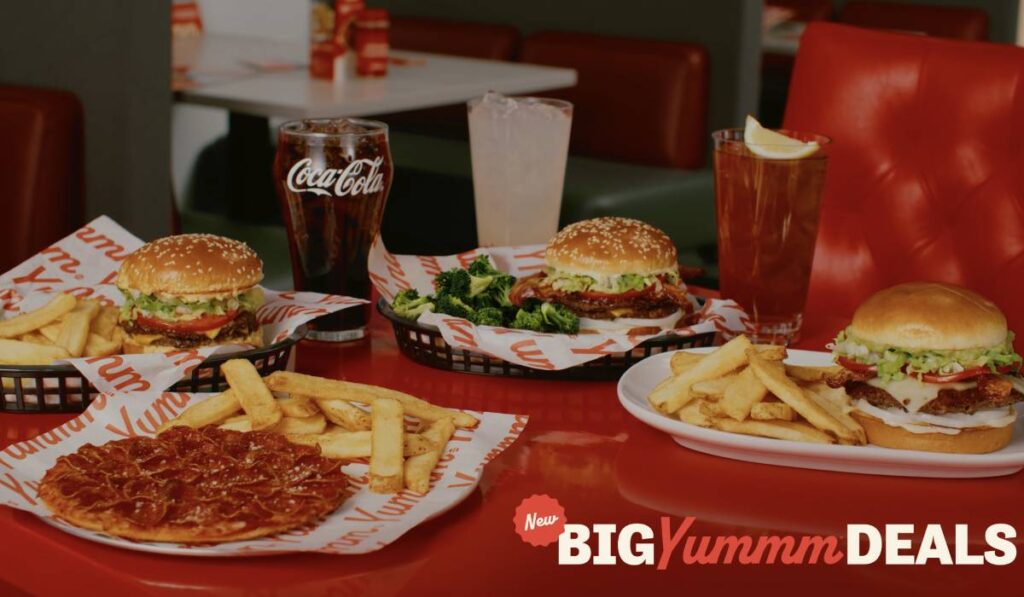
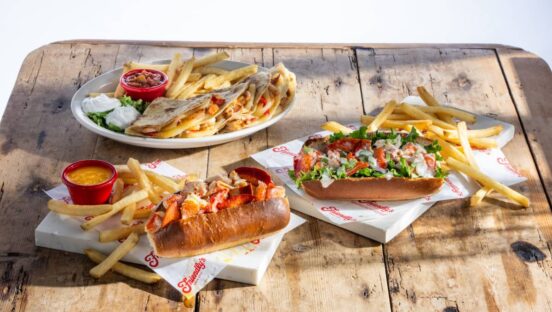
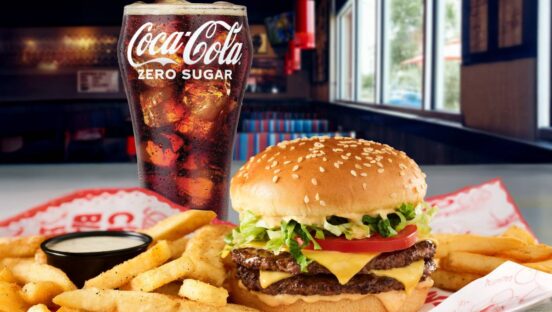
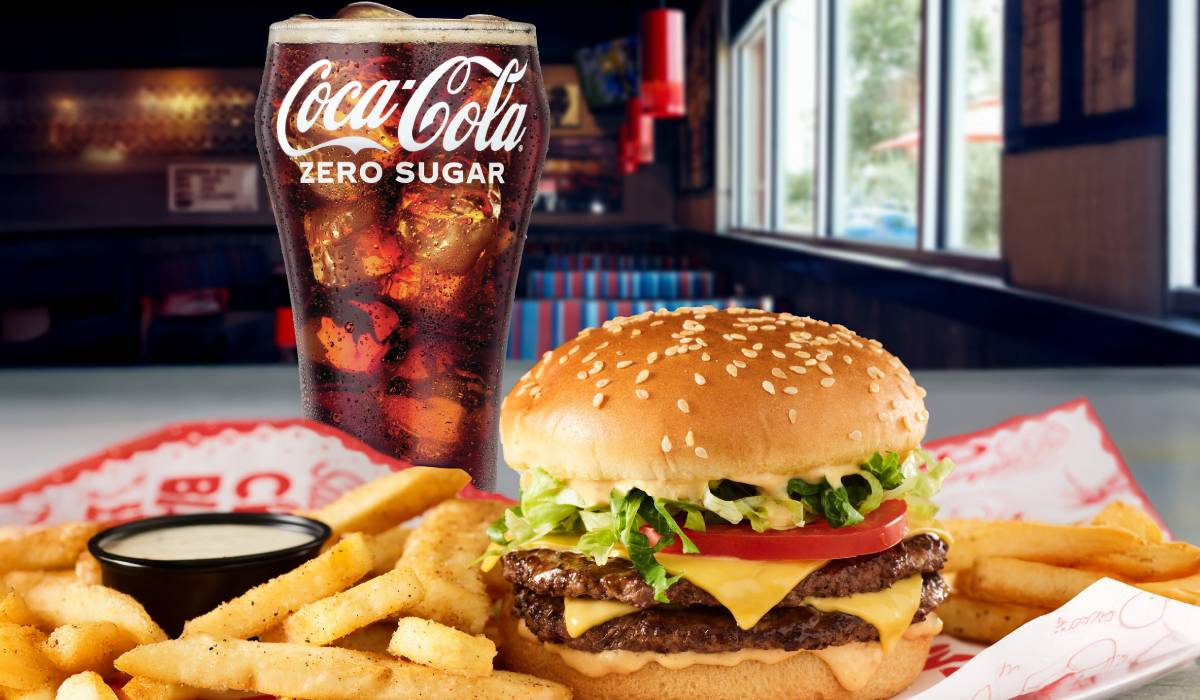
That led to the introduction of Big YUMMM in July 2025. It featured a Red’s Double Tavern Burger, choice of Bottomless Side and beverage at, as mentioned, $9.99. Chili’s 3 For Me, for a comparative measure, prices $10.99. Applebee’s has $9.99 burger deals on Tuesdays and the 2 for $25 Menu that allows customers to pick two entrees and an appetizer.
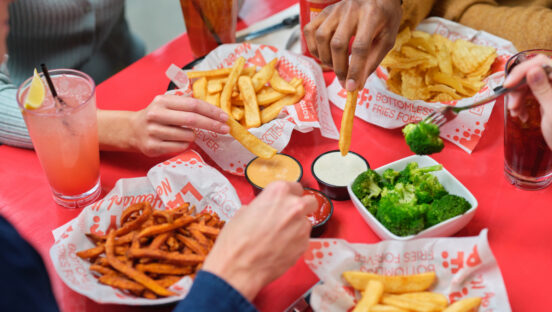
More recently, in January, Red Robin introduced a Big YUMMM Deals value menu with more entrees and specials (six-plus options ranging from $9.99–$16.99). That integrated Big YUMMM deals directly into the chain’s core offering. It also extended the architecture beyond burgers into categories such as hand-breaded crispy chicken sandwiches, Donatos pizza, and Whiskey River barbecue wraps. Each meal includes bottomless sides and beverages, “reinforcing value while preserving the full Red Robin experience,” Pace says.
Consumers “immediately” responded, he continues. Employees did as well. “And we just saw a trajectory through the rest of the year to pull us back out,” Pace says.
Big YUMMM represented 10 percent of dine-in mix in Q4.
The January extension broadened Red Robin’s premium offerings to reinforce a barbell approach so guests could either target value or ladder up to higher-priced offerings. More choice across occasions.
Early results, Pace says, showed increases in average check.
In this climate, he adds, restaurants need to have a hook. That customer is out there. “They want to see a value opportunity,” Pace says.
Still, it was vital for Red Robin to manage the P&L and PPA (per-person average), which is what led to diversifying through the recent Big YUMMM expansion.
The second half of 2025, though, was less about PPA and more about igniting traffic. Red Robin had to get customers back and viewing it as a good value again before the brand could worry about growing basket sizes.
And as noted earlier, the chain was able to gradually roll off pricing as the year progressed, which helped as well. It gave Red Robin an opportunity to introduce indulgent products to guard margin while having that value branding established.
Pace says, viewing larger consumer themes, there remains a good bit of uncertainty ahead. There is no shortage of pressure points on diners, and if restaurants can find a way to offer value while staying above the line, “I think that consumer is still going to be there,” he says. “I think people want a good experience for a reasonable price. If we can give it to them, they are going to come. They may come a little less often, but they’ll come.”
The message evolves
Pace was on the ground level of Red Robin’s quality changes. One of his directives to leaders while serving as chair was how do you amplify those points? “It’s like, OK, great, but how do people know you have better ingredients?” Pace says.
Pace, simply phrased, wanted to start telling everyone. “You can’t just expect gravity to take over for you on this stuff,” he says.
Pace has been in the restaurant arena for 35-plus years. Going back, he served as EVP and chief resource officer at Bloomin’ Brands from 2010–2014. Earlier, he held various roles at Starbucks, PepsiCo, Yum! Brands, and others. His last stop before Red Robin was co-CEO of SPAC Tastemaker Acquisition Corporation.
The historic approach to marketing, Pace says, was “carpet bombing.” Meaning organizations blasted stuff out and accepted inefficiencies. You expected to hit some targets along the way.
What’s happening at Red Robin now, however, is something Pace hadn’t seen before.
It falls under the “First Choice” marketing strategy Red Robin implemented in Q3. The plan gears toward personal engagement and precise campaigns. Red Robin mapped every restaurant across six to eight competitive categories and clustered stores based on similar trade area dynamics and messaging needs.
The company’s analysis, he says, supported focused and locally relevant messaging. This way, restaurants on a store level could compete effectively market-to-market.
In short, Pace explains, Red Robin transitioned from a broad, one-size-fits-all approach to a marketing model that’s more disciplined and efficient. It focuses on the right message to the right guest at the right time. During its Q4 earnings recap, an investor referred to it as “micro-targeted marketing.”
Pace says Red Robin is probably two-thirds of the way through activation. “We’re putting them in action and trying to understand then what’s the response,” he says. As learnings flow in, Red Robin will continue to reallocate among those “clusters.” If something isn’t showing the desired elasticity, it will move to another.
Pace says there’s “so much data” available these days. Marketers can dial in at the customer level. A trade area used to be a 5-mile radius around a restaurant. You’d ask what the guest in the bubble looked like. Today, however, there’s so much information, he says, where Red Robin understands the trade area is not, in fact, a circle around the restaurants. There’s a pool of people and you can see how they overlay with customers.
“And you understand where they are relative to your restaurant and you can speak to them,” he says. “And if they’re not coming to us, where are they going? What are they buying? We know those things. So, we can target and go, OK, how do we get that person who wants that to come back to us?”
It might be a product offering. A value deal. “The level of marketing detail is unlike anything I’ve ever seen before,” Pace says.
And as Red Robin shared on the call, it’s conducted the mapping and understands dynamics and consumer groups, alongside appeal. It gets customers’ interests and demands. Now, it’s time to deliver messaging to match needs.
Each cluster is getting two across eight different categories. Red Robin can mix and match as needed.
“It sounds complicated,” he says, “but it really gets simple once you start understanding the data and you can start targeting those more directly.”
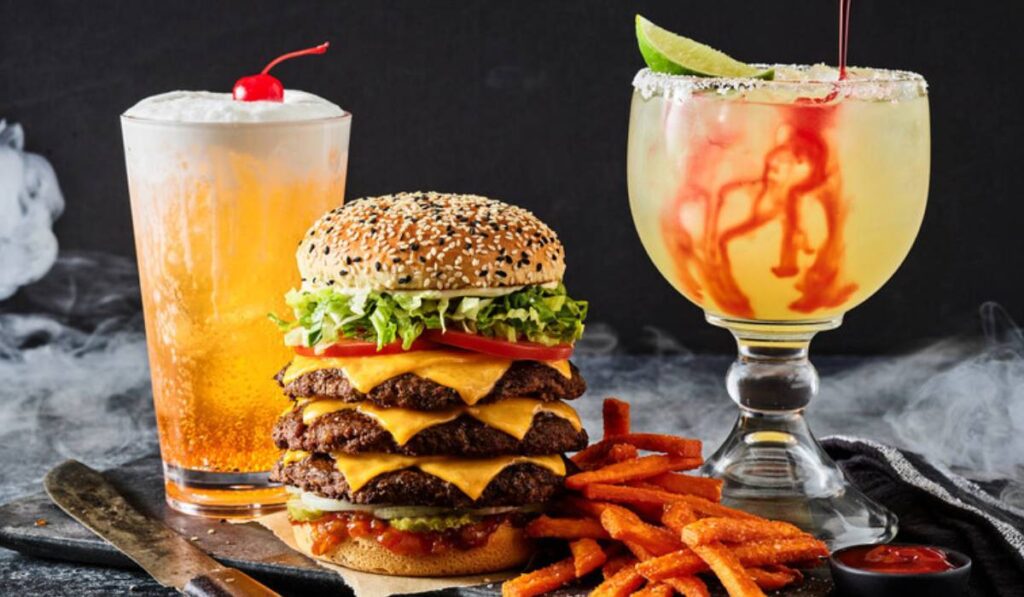
The brand in Q4 launched an enterprise version of ChatGPT as well that’s resulted in expanded use across the organization, Pace says. Red Robin is in the process of introducing the platform to managing partners along with custom tools. It’s helping partners optimize labor costs, COGs, and guest service. They can see labor spend daily and forecast.
The overall impact, Pace notes, of team-centric investments resulted in hourly turnover at its lowest level since 2017. Engagement scores are improving.
“This translates directly into how we serve our guests and support one another,” Pace says. “As we look ahead, we’ll remain focused on creating an environment where great people can build meaningful and rewarding long-term careers.”
Red Robin ended the year with 475 locations, down from 498 year-over-year. Of those, 385 were company owned and 90 franchised. The numbers were 407 and 91, respectively, a year ago. Red Robin is making progress on “tactical refranchising” to strengthen its balance sheet and capital. It plans to deploy proceeds from completed deals to cut debt.
Unrelated to that aim, but a reflection of franchisee confidence in ongoing improvements, Pace says, three of the chain’s current groups indicated they are pursuing new unit development opportunities within their territories.
In a similar vein, the third corner of Red Robin’s First Choice plan is “find money,” including cutting G&A expenses. Excluding stock-based comp, the chain decreased G&A by more than $4 million in 2025 and expects a similar step down in 2026. G&A costs were $14.9 million in Q4 versus $18.4 million in the year-ago period.
The other pillar is “fix restaurants.” Last year, Red Robin completed 20 light-touch refreshes to “maintain competitive standards” to mirror food and service improvements. That program will resume in late Q1. Red Robin has $25 million to $35 million earmarked for CapEx in 2026.
Additionally, Red Robin will roll replacement devices for server handheld technology and introduce an upgraded version of its Ziosk tabletop devices to improve server efficiency, order accuracy, and speed of service, “returning the gift of time benefit that Red Robin has historically been known for,” Pace says.
More widely, he shares, Pace wouldn’t have made the CEO jump if he didn’t have an itch for the business.
“My style is to go fast,” he says. “I like to run really fast. If we make a mistake, we’ll fix it. We’ll move on. But we have a lot of things to fix and a lot of things to do, so let’s go. As soon we get this thing done there will be 10 things behind it.”
It’s a sentiment taking shape with store-level leaders. Red Robin was founded in 1969. It has reserves of equity and operators who have been with the system for years.
“I think they wanted to know they had support from behind,” he says. “… I think what gives me the most hope is we’re rallying the team. They’re engaged. They’re starting to see that they can win again.”