
Outback Steakhouse’s turnaround strategy is starting to take hold.
In Q4, U.S. same-store sales fell 0.6 percent, supported by 0.9 percent traffic growth, marking the first quarter of positive traffic since Q4 2021. Bloomin’ Brands CEO Mike Spanos pointed to the Aussie 3-Course meal—composed of $14.99, $17.99, and $20.99 price tiers—which is increasingly being used by rewards members and new customers. Sixty percent of guests are trading up to the $17.99 and $20.99 levels.
Outback will invest about $50 million into its turnaround this year—$25 million in steak excellence and menu redesigns, $7 million in a new service model, $8 million in managing partners, and $10 million in marketing. A majority of funds will be spent between Q2 and Q4.
These investments will be offset by about $30 million in nonguest-facing cost-saving initiatives spread throughout 2026. This includes renegotiating costs with suppliers, optimizing product selections, eliminating unnecessary vendor spending, streamlining processes in restaurants, better leveraging technology, simplifying back-of-house operations, and improving labor scheduling.
The chain hopes to reach $80 million in cost savings between 2026 and 2028.
READ MORE:
Outback Steakhouse to Pour $75M into Comeback Plan and Reigniting Brand Experience
Outback’s Turnaround Will Take Time, Commitment to Quality and Execution
Amid Traffic and Sales Slump, Outback Steakhouse Refocuses on Value and Simplicity
Outback’s comeback begins with the menu.
In November 2025, the casual giant launched a new steak lineup, led by sirloin, bone-in ribeye, and a half-pound burger. These products have increased guest satisfaction and reorder intent scores.
Outback supported the launch by having multi-unit leaders complete steak excellence certification training before coaching their own restaurant teams. Operators are in stores during peak hours holding employees accountable for steak accuracy, quality, guest intent to return, and satisfaction. They’re also using Ziosk tabletops to gather guest feedback and learn where the opportunities are at each location.
In Q4, Outback grew brand trust by seven points, food scores by five points, service by five points, value by three points, and atmosphere by three points.
“Within the Outback principles and beliefs, we commit that close is never good enough for Outbackers,” Spanos said during the chain’s Q4 earnings call. “We are getting back to our roots on steak leadership and will ensure steak certification training is part of our culture.”
The elevated steak ownership feeds into Outback’s next task—enhanced customer service. The brand is on pace to introduce a revamped service model in Q2, involving a move from six tables per server to four tables. In tests, the chain saw improvements with guest intent to return, server attentiveness, and likelihood to recommend the server, in addition to positive feedback from employees.
“We think that’s the right level of interaction,” Spanos said. “We think that’s consistent with the balance of casual dining. It really goes back to the root of the brand when we started as well.”
At the same time, Outback is developing enhanced compensation packages to attract quality managing partners. Spanos wouldn’t share specific details, but did note that offers will “be tied to the P&L of the restaurant while we also make sure they’re feeling good about the base salaries.”
One impact leads to another—better managing partners means more operational execution and then an eventual rise in sales and profits, Spanos explained.
“Having a lot of fun is people walking in the door at the partner level feeling they’ve got a competitive wage, competitive total compensation so we can retain and recruit the best talent,” Spanos said. “That’s good for the team. It’s good for turnover. It’s good for the brand. It’s good for the guest experience.”
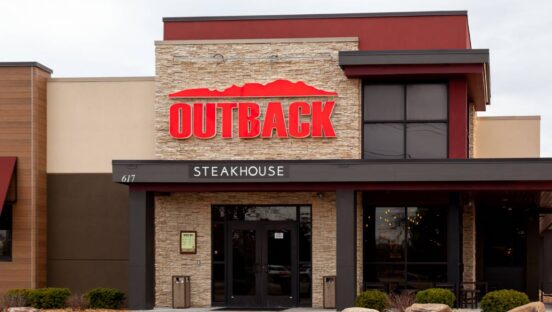
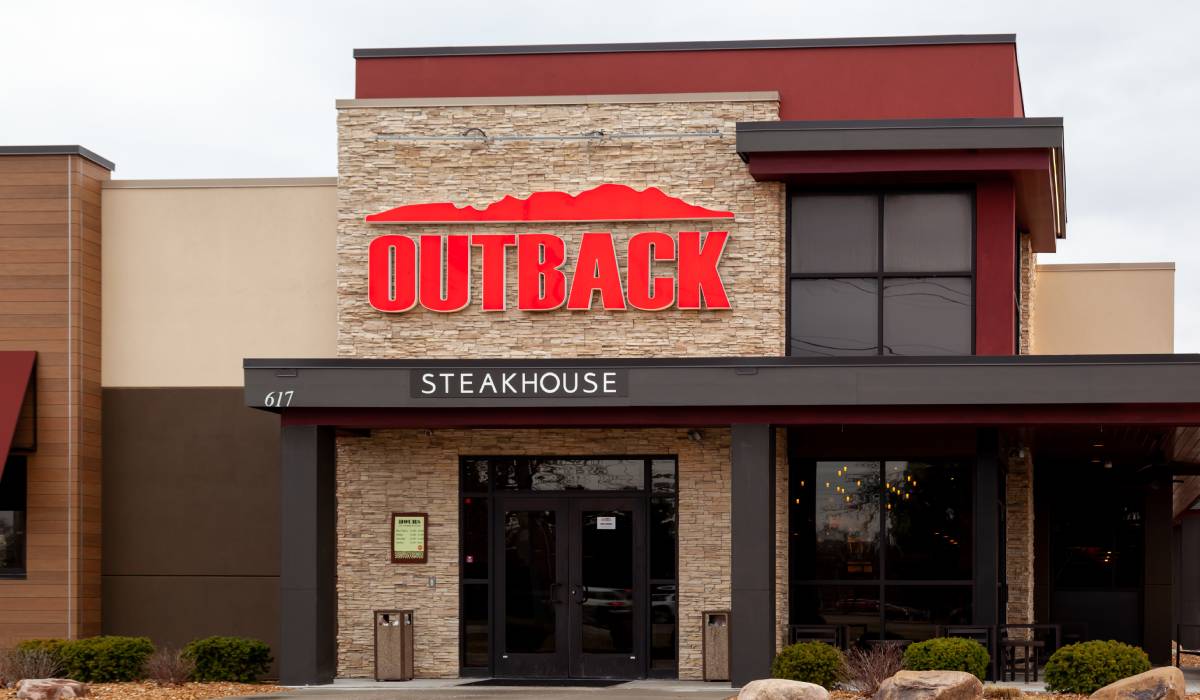
In terms of building infrastructure, Outback’s goal is to refresh the interior and exterior of nearly all of its stores by the end of 2028. The changes should cost between $350,000 and $400,000 per location. The brand is also expanding char grill capacity in all of its restaurants to support the new steak lineup; this should be completed by the end of the year.
Another step is raising awareness and persuading customers to visit. Outback will do this by focusing 60 percent of its media mix on digital and 40 percent on traditional television, compared to 33 percent and 67 percent in 2025, respectively. The chain plans to increase marketing spend year-over-year, mostly in the second half of 2026.
Outback currently has 42 test locations that have deployed steak quality changes, menu innovation, updated service models, and value offerings. The restaurants have shown “highly encouraging” results across traffic, guest satisfaction, and value scores, according to Spanos.
“It validated that we got the right strategic plan,” the CEO said. “We’re confident that we can grow traffic and execute the platforms with success. And it really helped us know we got some no-regret investments, which I like to call them. We know we got to get steak quality right, service right, and that hospitality experience right.”
Elsewhere in Bloomin’s portfolio, Carrabba’s Italian Grill saw same-store sales rise 1.6 percent in Q4, with slightly negative traffic. Momentum was fueled by experiential wine dinners, lunch, catering, and off-premises dining.
Bonefish Grill’s comps increased 0.1 percent, backed by 2.3 percent traffic growth, the chain’s first positive traffic result since Q1 2022. Spanos credited the shift to value offers and day-of-the-week promotions like Martini Mondays and Bang Wednesdays.
Fleming’s Prime Steakhouse & Wine Bar same-store sales grew 0.1 percent, with traffic declining 2.4 percent. The chain is turning positive because of experiential dinners, better service, and events and catering.
Bloomin’ as a company saw favorable sales trends in the first part of Q4, but then noticed a dip in traffic in the latter half. The first quarter fared better until parts of the country were hit with winter storms, which affected U.S. comps by 2 percent.
The restaurant group expects Q1 domestic same-store sales to be between flat and up 1 percent in fiscal 2026.
Outback finished 2025 with 666 U.S. restaurants. That’s followed by Carrabba’s (204), Bonefish (158), and Fleming’s (66).