
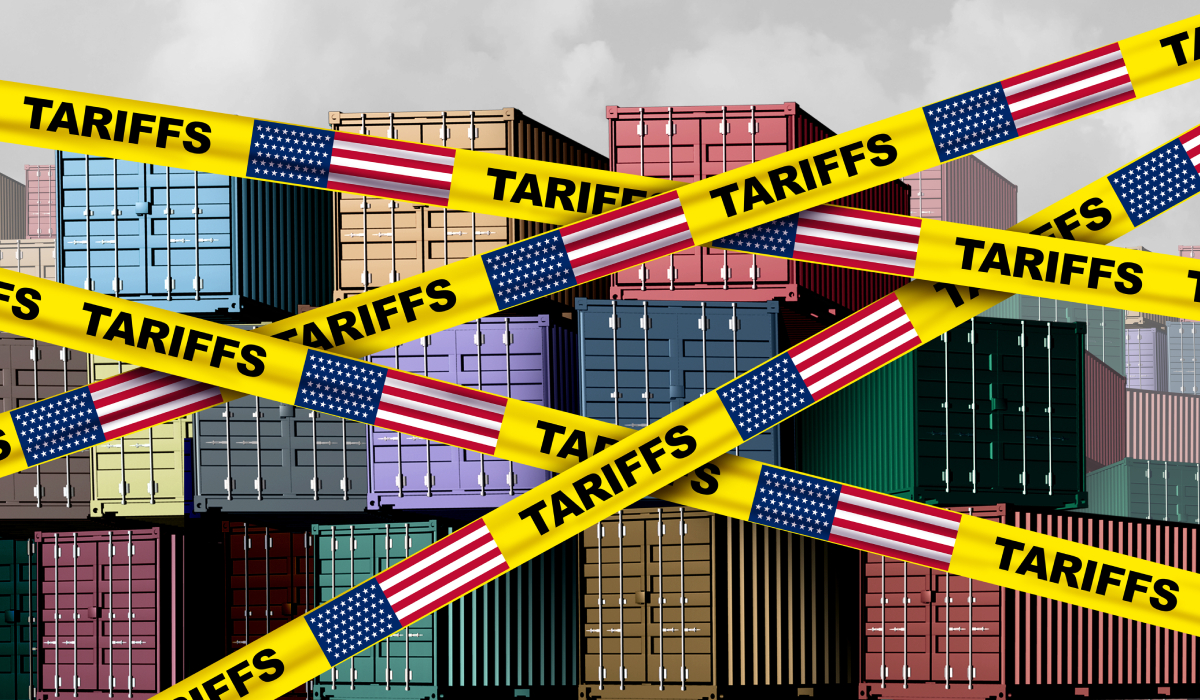
The Supreme Court ruled against President Donald Trump’s global tariffs on Friday, declaring the economic restrictions were not authorized under federal law.
Cracker Barrel, which sources roughly one-third of its retail products from Chinese vendors and said tariffs impacted its Q4 2025 by $5 million, appreciated the news. The Wall Street Journal reported shares at the casual-dining giant rose 2 percent after the decision was handed down. Kura Sushi, which sources products from Japan and Vietnam, saw shares rise 2 percent as well, according to the Journal.
After taking office in 2025, Trump declared national emergencies related to illegal drug trafficking from Canada, Mexico, and China, and large and persistent trade deficits with other countries. Using the International Emergency Economic Powers Act (IEEPA)—a law passed in 1977—he imposed broad tariffs, including 25 percent duties on many Canadian and Mexican imports, 10–20 percent duties on Chinese imports, and a baseline 10 percent tariff on nearly all trading partners, with some countries experiencing higher rates.
The Court struck down the IEEPA tariffs in a 6–3 decision. It ruled the Constitution gives Congress the power to impose taxes and tariffs and that the president has no inherent peacetime authority to deploy tariffs. The Court also emphasized that the IEEPA does not clearly authorize tariffs and that no other president has used the law to impose tariffs before.
Tariffs proved to be a major challenge for more than 60 percent of restaurant operators in 2025, according to the National Restaurant Association’s 2026 State of the Industry Report. It also noted that even after some reciprocal tariffs were lifted in November, many restaurateurs were already absorbing increased expenses.
“What made it particularly difficult for operators was the uncertainty the tariffs caused. Restaurant operators need consistency in the global food supply chain to plan menus and maintain pricing,” Michelle Korsmo, president and CEO of the Association, said in a statement. “We support the president’s efforts to balance trade deficits, but the food and beverage products we depend on are not major contributors to these imbalances. We urge the Administration to exempt food and beverage products from any new tariffs.”
But the debate is far from over. Hours after the Court handed down the decision, Trump announced plans to sign an executive order imposing a new 10 percent global tariff, based on the Trade Act of 1974, CNBC reported. On Saturday, Trump said he would bump it to 15 percent.
However, the publication also noted that these tariffs would only last 150 days until Congressional approval would be required. The president claimed he will search for other ways to impose tariffs without Congress.
“I’m ashamed of certain members of the court, absolutely ashamed for not having the courage to do what’s right for our country,” Trump said during a White House press briefing, according to CNBC.
Major media outlets have also posed the question as to whether businesses will receive refunds for the money they paid toward tariffs. But the White House hasn’t given direction about what will happen.
California Gov. Gavin Newsom released a public statement demanding the Trump Administration issue refund checks to households and businesses nationwide.
“Time to pay the piper, Donald,” the news release said. “These tariffs were nothing more than an illegal cash grab that drove up prices and hurt working families, so you could wreck longstanding alliances and extort them. Every dollar unlawfully taken must be refunded immediately — with interest. Cough up!”
According to the Yale Budget Lab, the remaining tariffs in effect mostly impact metals, vehicles, and electronics. If the IEEPA tariffs weren’t cut down, there would’ve been more of a burden on apparel and food products.
In December, the Tax Policy Center estimated that if the Court overturned the IEEPA tariffs and they weren’t replaced, taxes on households would decrease by $1.4 trillion over 10 years. This would also save families an average of $1,200 in 2026.