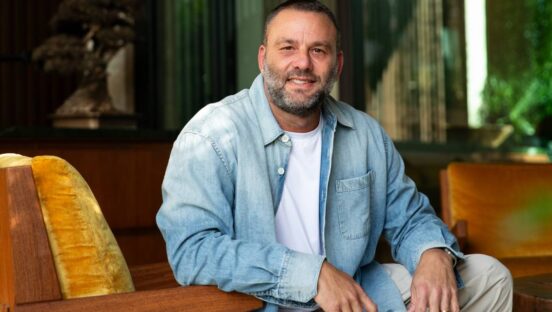

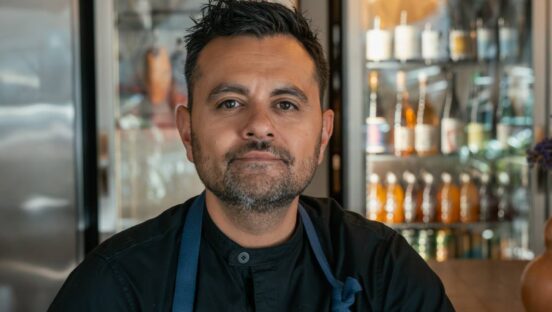
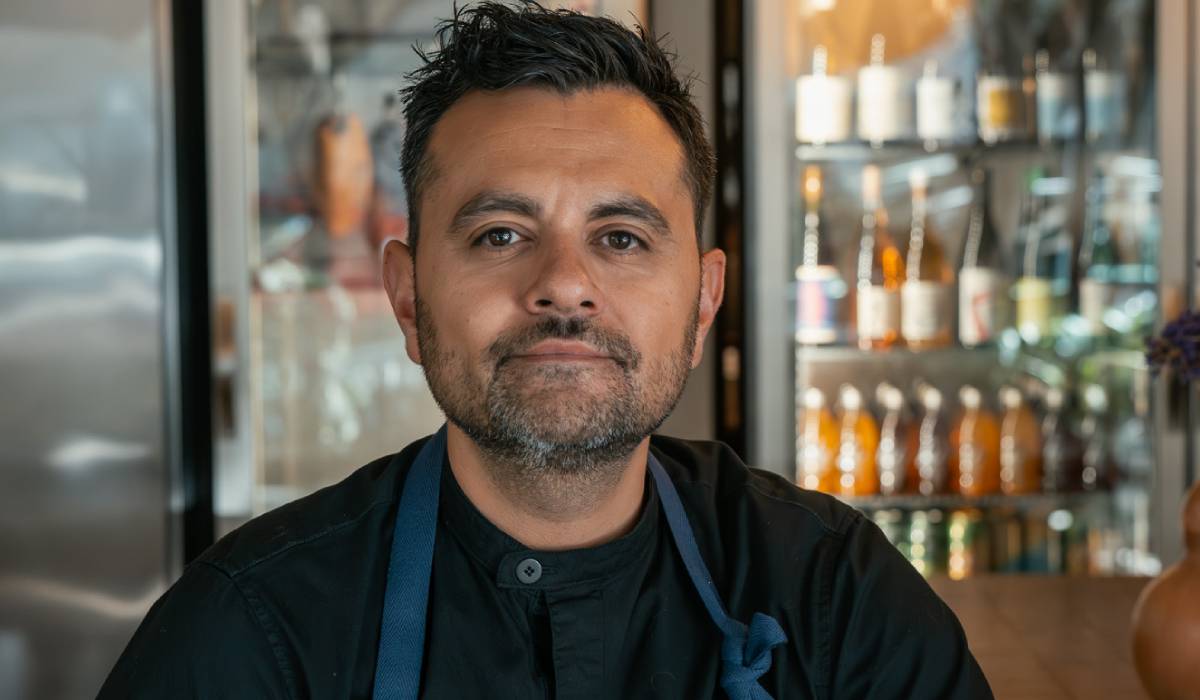
Michael Diaz de Leon never thought he’d end up cooking on TV. But when the opportunity arose to compete on America’s Culinary Cup starring 16 of the country’s most elite chefs clamoring to win $1 million, it was simply (and obviously) “too good to pass up.”
A first-generation Mexican American born in the border town of El Paso, Texas, the budding chef developed an early and enduring affinity for community, connection, and storytelling through food, which continue to influence his culinary and leadership style today. He earned an associate’s degree in culinary arts from El Paso Community College, where he says he fell in love with the culinary profession and never looked back.
After cooking his way through a variety of environments and establishments—from food trucks and grill and bars to country clubs and Michelin-starred restaurants—Diaz de Leon was hired as chef de cuisine of Taft Diaz, a high-end Mexican spot in his hometown. Two years later, he moved to Denver and secured the role of sous chef at Old Major—but in 2020, the pandemic forced the restaurant to close. Still, Diaz de Leon found a way to keep working. He made sandwiches at his local grocery store and partnered with Kelly Whitaker to spearhead an advocacy kitchen.
- Post-shift drink? Pineapple Tepache (fermented NA Mexican beverage with soda water) or wine
- Favorite Denver restaurant (outside your own)? Hop Alley
- Secret comfort food? Anything dip related—buffalo chicken dip, hummus, chips & salsa
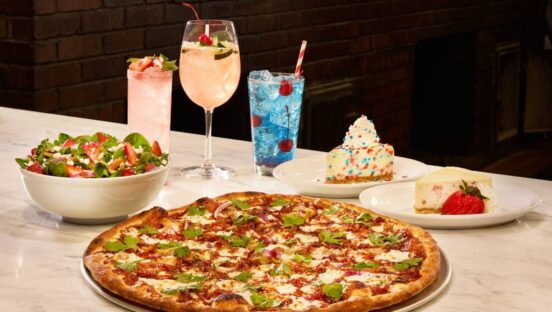
- Go-to pizza toppings? Classic jalapeño and pepperoni, drizzled with hot honey
- Favorite foodie city? Mexico City or NYC
Diaz de Leon hosted weekly taco omakase pop-ups at Whitaker’s open-fire-driven concept, BRUTØ, and was soon tapped to lead the high-end concept as executive chef, with complete control over the intimate chef’s counter. There, Diaz de Leon crafted technique-driven dishes rooted in sustainability, celebrating traditions from Latin America, México, Texas, and Colorado. His work at BRUTØ centered on relationships with farmers, ranchers, and artisans, weaving their stories into the dining experience that nurtured a deeper conversation among guests.
With Diaz de Leon at the helm, the restaurant was awarded its first Michelin star in 2023, plus honored with a Michelin Green Star for sustainability. The same year, he was recognized when he became the state’s only James Beard Award finalist for Best Chef, Mountain Region. But on November 11, 2023—his three-year anniversary at BRUTØ—Diaz de Leon announced his departure from his role on Instagram, writing that he was “in a place of starvation for exploration, growth, and connection with the world. It’s time for me to experience other cultures, approaches, and practices that the world has to offer and teach me.”
He also wrote, “The journey from Burger King to BRUTØ has been beyond incredible, and I am forever grateful to each stepping stone that has led me to this moment.”
Diaz de Leon took a breath, spent time with family, and traveled to Uruguay and back to his roots in El Paso. “In the interim of me leaving BRUTØ to where I am now, I was traveling, doing pop-ups, consultancies, kind of just re-finding my love for food, trying to figure out next steps,” he says. Before returning to Denver, he called up his friend, prominent chef Tommy Lee—the founder of Uncle restaurant and modern Chinese spot Hop Alley—to see if there was an opportunity to do a pop-up or collaborate again.
That conversation led to touring potential locations to open a Mexican restaurant, he recalls. At the time, he already had a desire to open his own restaurant. Fast forward three months to Lee and Diaz de Leon signing a lease at Stanley Marketplace, and then to November of 2025, when they opened the Mexican City-inspired taqueria, Molino Chido.
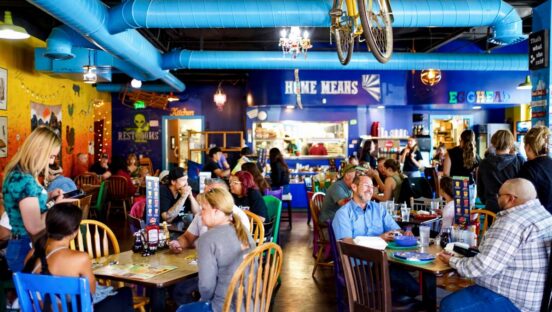
Molino translates to “mill,” and chido essentially means “cool.” The restaurant embodies an intentional approach to hospitality rooted in heritage and craft. They honor an ancestral technique to make masa dough, which becomes corn tortillas, called nixtamal. Heirloom corn—grown in southern Colorado in partnership with the Ute Mountain Ute Tribe—is cooked and soaked in an alkaline solution, which also improves nutritional value, then ground into masa. Guests can see this process through large front windows, watching staff make the dough and tortillas by hand. Inside, the space is open, vibrant, and green, channeling a Mexico City market with a serious bar program.
With Molino Chido, Diaz de Leon is also challenging preconceived notions of what Mexican cuisine can—not “should”—be. “I am very much a person that likes to push the envelope on certain things,” he says. “So when people found out that we’re opening a taqueria, which is somewhere you get tacos, there’s automatically this idea of, ‘Oh, I’m just gonna go get street tacos, and there should be a certain price, and Mexican food shouldn’t be expensive, it should be cheap’—which is obviously complete bullshit.”
The menu moves from crudos (ceviche, aguachiles, raw vegetables) to masa-driven plates like tetelas and flautas, into large-format “grandes” that serve two to four people ranging from a $25 Milanesa dish with fried chicken cutlet, rajas con queso, xnipec, and umami slaw, to a $58 carne asada steak with a 16-ounce New York strip, tomato tamarind chutney, cebollitas, chiles toreados, and tortillas.
Six rotating seasonal tacos also offer guests a diverse selection, from a $4.85 al pastor with marinated pork and pineapple to a $11.85 beef strip loin with green peppercorn, onion, con costra (cheese crust). However, Diaz de Leon has watched some customers “refuse to pay $4.50 for a taco,” to which he simply responds, “Well, then the restaurant’s not for you.”
Diaz de Leon and his team spend time educating consumers on why certain decisions were made, from not having avocado on the menu due to deforestation issues in Mexico to why they don’t serve rice. “You don’t get rice in taqueria,” he says. “There’s just this misconception of, every Mexican restaurant should be the same, chips and guac, rice and beans and fajitas.”
He adds, “I’m a highly trained Michelin-starred chef that thinks outside the box. If anything, you’re going to get the complete opposite of that. So it’s been really interesting to just get people to understand that we’re looking at it from a different perspective.”
When approached with the opportunity to appear on America’s Culinary Cup, Diaz de Leon, who describes himself as “hyper competitive,” was attracted to the chance to challenge himself and see where he stacked up against some of the best chefs in the country. He also took the time to think about what the exposure could mean for himself and Molino Chido. “I was opening a restaurant, and I have to think about the bigger picture, which is the wellbeing of that restaurant and the employees that we are responsible for,” he says.
“And I have a big responsibility to the community, not only here in Denver, but as a Latino man in this country,” he adds. “I want to represent the young Latinos and Latinas that are coming up and give them an example of, ‘Hey, this young man from a border town with immigrant parents went from nothing to now being on the biggest stage on TV … if he does it, then I can do it too.’”
America’s Culinary Cup premiered its first episode in March, hosted by Emmy Award-nominated food expert Padma Lakshmi, with acclaimed chefs Michael Cimarusti and Wylie Dufresne as judges. New episodes will continue to air on CBS and streaming on Paramount+.