
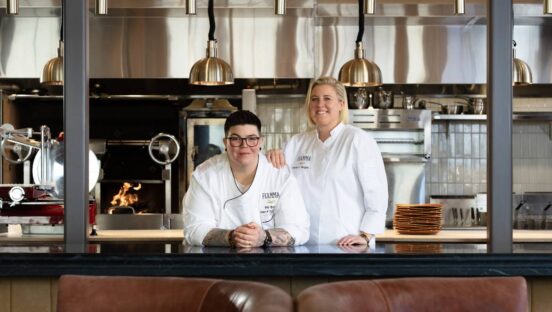
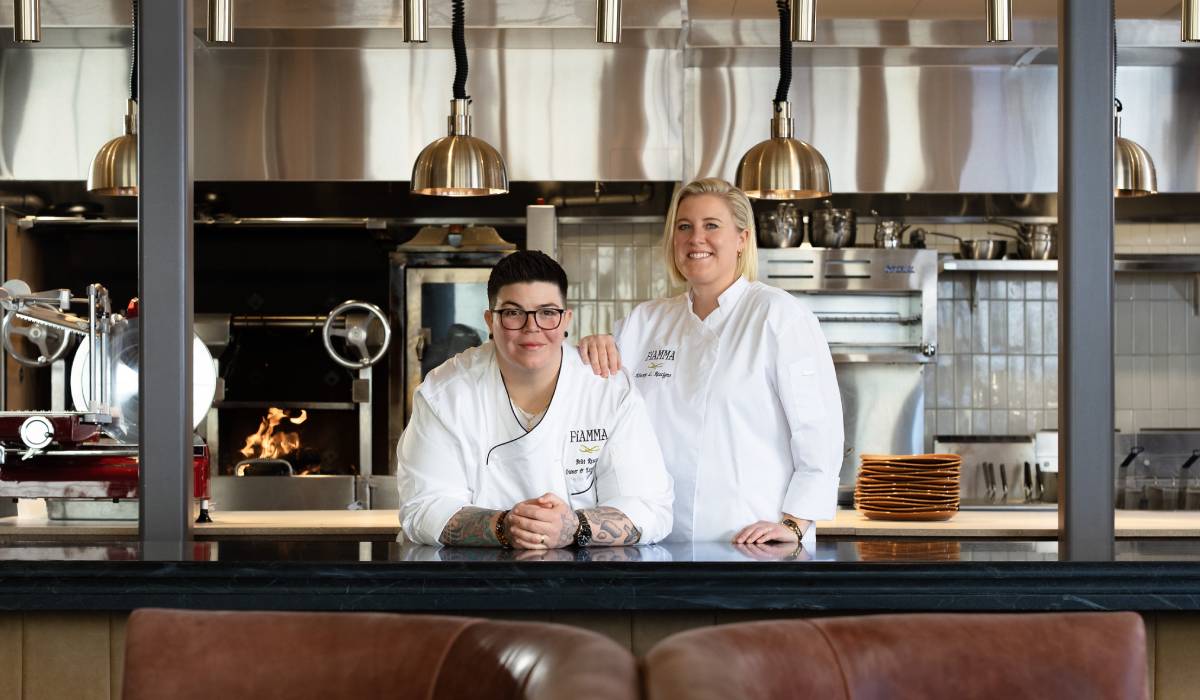
Some people spend years searching for the perfect neighborhood to call home. For chef Britt Rescigno and her wife, chef Kinsey Leodler, that search looked a little different—they were looking for the right place to put down their restaurant roots.
The pair spent two years traveling together before deciding to launch a concept, considering cities like Seattle and Charleston, South Carolina, along the way. Ultimately, they landed in Sun Valley, a destination resort town in Idaho.
It wasn’t entirely unfamiliar territory. The chef duo had already built meaningful ties to the area, including donating four dinners at a local food and wine festival that raised nearly $50,000 for a nearby culinary school. It felt like more than just a potential market—it felt like the right fit.
“We fell in love, first, with the surrounding area. The mountains are majestic—it’s just so beautiful,” Rescigno says. “But we also fell in love with the community, working with the culinary school and local distributors. The people here are so wonderful, and they filled our hearts and souls. We knew this was where we wanted to be.”
Enter Fiamma, Italian for “little flame.”
For Rescigno and Leodler, the concept is rooted in a shared fascination with fire. They love cooking outdoors, building fires, and experimenting with different woods and seasonings—oak and mesquite among their favorites. Rescigno, who grew up in a New Jersey Italian household, was especially drawn to the simplicity of the cuisine.
When it came time to build their restaurant from the ground up, they wanted it to feel deeply personal. At the center of the space is a 7-foot hearth, anchoring both the kitchen and the experience. The approach is primal: cooking with your hands, engaging all the senses—touching, feeling, and tasting at every step.
“Our culinary philosophy is similar to that of the Italians, which is simplicity and regionality,” Leodler says. “The idea that food you pluck from the earth right where you are always tastes better than something shipped from somewhere else. Food made by hand always tastes better than something made by a machine.”
While two chefs under one roof can sometimes be a struggle, that isn’t the case for Rescigno and Leodler. They believe two chefs are better than one, and they don’t function as independent, territorial beings. Instead, they love working with others, building teams, and staying hands-on in the kitchen every day.
“There’s a lot of yin and yang between [Rescigno] and me, and we’re much stronger together. We’re like two puzzle pieces that create a stronger, more solid vision,” Leodler says. “The collaborative nature between us trickles down to the rest of our staff and encourages them to collaborate as well. We keep an open-door policy for not just issues, but also great ideas, and it has created a very strong team culture.”
This year marks Fiamma’s first anniversary. Because Sun Valley is seasonal, the duo has had to serve two markets at once—a strong, supportive local population alongside a constantly changing tourism base.
“We get the opportunity to show people their first experience at Fiamma all the time, but we also get to create something stable for our long-term guests,” Leodler says. “It’s a challenge to balance the two, but it keeps things interesting.”
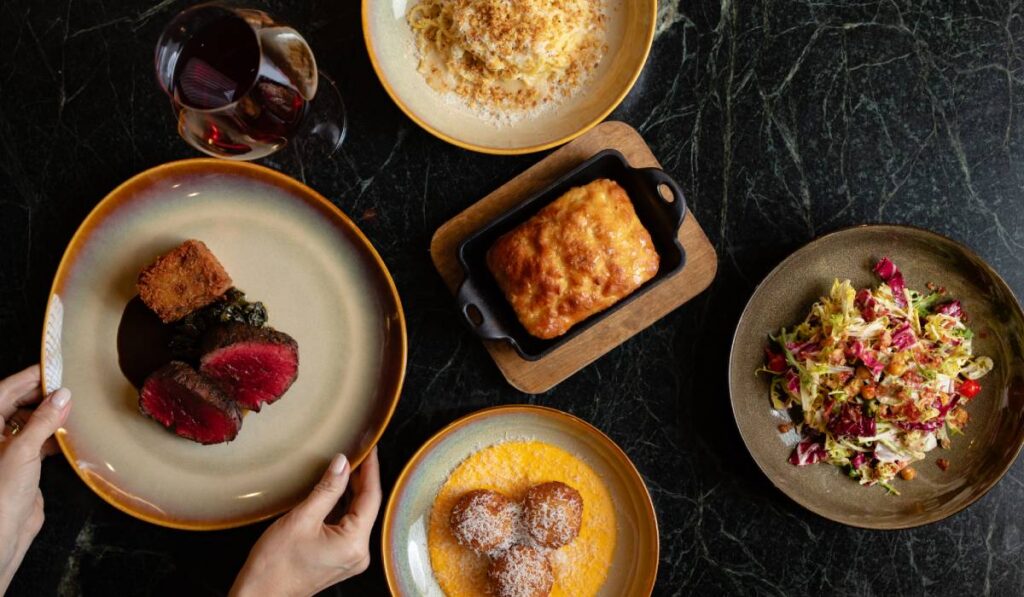
Whether it’s a tourist coming off the mountain after a day of skiing or a local’s 10th visit, there’s an innate desire to feel seen, to be excited, and to feel like it’s a special experience—which is exactly what the duo aims to provide. The menu is designed to let guests “choose their adventure,” with flexible options and pricing tailored to the occasion—whether it’s a business dinner or a quiet date night.
One of the most fascinating—and exclusive—dishes on Fiamma’s menu is its steakhouse burger, with only five made per day. The burger originated as a way to reduce waste but quickly became one of the most coveted items, while also helping create a new happy hour bar crowd.
“We do a lot of in-house butchering, and there’s always leftover filet tips and ends of New York strip, elk, and venison—good meat that feels like a waste to put into stock,” Rescigno says. “We also wanted to push a burger in the early evenings, before we start selling premium steaks. So Kinsey and I decided to do this really sexy steak burger, and now, as soon as we open, people line up to get one. We no longer have a 4:30 lull—we’re making money, not wasting product, and everyone is happy.”
The overall menu has evolved significantly since opening. Six months in, the duo revamped it to focus more on house-cut steaks cooked on the hearth. The concept shifted from a regional Italian pasta house with live-fire proteins to more of an Italian-style steakhouse—a change that was met with strong guest response.
“It’s critical as a restaurant owner and chef to respond to your market. Of course, you want to serve things that fulfill your heart, because you can taste it on the plate,” Leodler says. “But it’s important to pay attention to what your customers want. We change our menu every four to five weeks, constantly putting new ideas out into the market.”
Connecting each dish to a larger story is also central to Fiamma’s philosophy. Staff are trained to guide guests through the menu, explaining the inspiration behind each dish and why it’s featured. Rescigno and Leodler have also added short descriptions to highlight some of the more traditional, old-world pasta dishes, reinforcing an emotional connection with guests.
For Leodler, the most rewarding part of the journey has been creating a workplace where the team can truly connect and enjoy a more sustainable lifestyle.
“I am so proud of the team we’ve built. For the last 20 years, some of our staff members had to work three jobs to make ends meet, and now they can support themselves with just one job at Fiamma. To me, that is so meaningful,” Leodler says.
Rescigno is equally excited about continuing to develop the team. After a year, she and Leodler have learned how to delegate more responsibility, fostering a deeper sense of ownership among the staff as they head into their second year.
“There’s a groundswell of culinary growth in the area, and I’m excited to see how our market evolves and how we can continue to grow alongside it,” Leodler says. “I can’t wait to see where we are in five years.”